Announcement

Collapse
No announcement yet.

You're not going to believe this: Inflation/deflation debate still alive?

Collapse
X
 
  • Filter
  • Time
  • Show
Clear All
new posts

  • bart
    replied
    Re: You're not going to believe this: Inflation/deflation debate still alive?

    Originally posted by Charles Mackay View Post
    consistent increase in the r.o.c. ...hmm, that is impressive.

    I bought a little of the CNY ETF and the Merk Asian Currency Fund but so far they aren't keeping up with yuan appreciation. Look at the CNY lagging.


    Good point... very few ETFs & ETNs do a good job of tracking their underlying item.

    You're still doing well too. Nice trade. :cool:

    Leave a comment:


  • Charles Mackay
    replied
    Re: You're not going to believe this: Inflation/deflation debate still alive?

    Originally posted by bart View Post
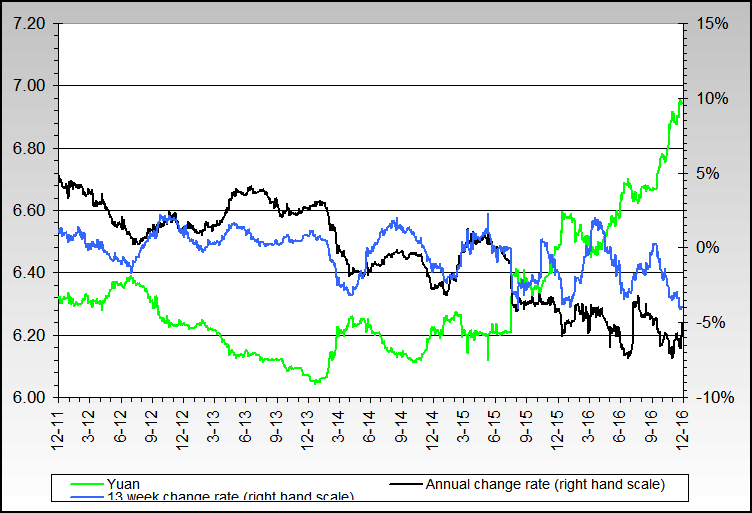
    The yuan appreciation rate has grown quite a bit in the last few months.
    consistent increase in the r.o.c. ...hmm, that is impressive.

    I bought a little of the CNY ETF and the Merk Asian Currency Fund but so far they aren't keeping up with yuan appreciation. Look at the CNY lagging.

    Leave a comment:


  • phirang
    replied
    Re: You're not going to believe this: Inflation/deflation debate still alive?

    Originally posted by c1ue View Post
    Once the Olympics are over, history will look at that event as the turning point in the China 'miracle'.

    With the choice between raising the yuan (and internal incomes) to compensate for dollar depreciaion or risking a second revolution as increasing numbers of hungry people get angry, China chooses instead to convert its previous growth bent into an internal domestic satisfaction policy.

    Rising wages and yuan drop China's growth into the moderate range: 5% a year. Investments into infrastructure slow down considerably.

    The long term result is what is to be expected of a large, populous, but fairly resource poor nation: permanent 2nd world status.

    Think Turkey.
    Some ppl at goldman agree, too:

    http://www2.goldmansachs.com/hkchina...1Q2008_eng.pdf

    Leave a comment:


  • c1ue
    replied
    Re: You're not going to believe this: Inflation/deflation debate still alive?

    Once the Olympics are over, history will look at that event as the turning point in the China 'miracle'.

    With the choice between raising the yuan (and internal incomes) to compensate for dollar depreciaion or risking a second revolution as increasing numbers of hungry people get angry, China chooses instead to convert its previous growth bent into an internal domestic satisfaction policy.

    Rising wages and yuan drop China's growth into the moderate range: 5% a year. Investments into infrastructure slow down considerably.

    The long term result is what is to be expected of a large, populous, but fairly resource poor nation: permanent 2nd world status.

    Think Turkey.

    Leave a comment:


  • Guest's Avatar
    Guest replied
    Re: You're not going to believe this: Inflation/deflation debate still alive?

    Originally posted by phirang View Post
    The chinese will have to lower their subsidies as their trade surplus attenuates do to global recession. Thoughts?
    Yes. The problem with such apparently rational excursions into prediction is that one has no idea if they will in fact occur, unless and until they do occur. If you proceed to add further conclusions on top of this assumption, don't forget the further conclusions are based on the preliminary assumption. You assume the Chinese lower subsidies. Well, yes, apparently they have already committed to this, so that appears correct. But then you assume a global recession. You risk building yet further assumptions onto whatever is built on the global recession thesis and it's stubbornly refusing to manifest itself.

    Weren't you calling for an inevitable recession six months ago? Why are small cap stocks not collapsing in relative strength to large caps if we are already manifestly entering a global recession? Alright, global markets are correcting badly, but you get my point. Small caps don't offer any of the classic signs by plunging relative to large caps, and there is no global recession in modern history that's occurred without that happening, right? Global oil consumption ex America gives no hint of a global recession. Just because you can reasonably expect one does not mean it will arrive. China's trade surplus is now highly distributed globally, and a good portion of it is with trading partners in the Pacific Rim.

    Their stock markets may implode, are imploding, but strangely their GDP does not reflect the dramatic stock market action. Too much Bloomberg screen oriented thinking leads to wrong conclusions. Meanwhile global oil consumption maintains a robust pace, inflation rates and commodities consumption (NOT commodities prices) maintain a robust pace. Methinks you are "still early" on calling a sharp decline in China's trade surplus too. All this waiting for the shoe to drop sure is frustrating, isn't it? If you see that global oil consumption, in the face of tight supply and blistering prices, is still rising robustly, maybe the global recession thesis needs a good careful going over. Very popular idea these days though!

    __________________

    China agrees to nearly double ore price

    Agence France Presse

    SHANGHAI - Baosteel, China's largest steelmaker, said Tuesday it had agreed to nearly double what it pays Anglo-Australian mining group Rio Tinto for iron ore.

    Baosteel, acting on behalf of China's steel industry, negotiated to pay between 80 and 97 percent more than last year depending on the category of iron ore, which is used to make steel.

    The new prices will affect all iron ore deliveries for the 2008 contract year that began on April 1, Rio Tinto said in a statement.

    Baosteel called the deal mutually beneficial and said it would help the long-term development of the steel industry on both the mining and milling sides.

    "Chinese steel companies will support Rio Tinto as it expands its investment and will increase output to meet market demand," Baosteel said in a statement.

    The deal was "very significant" as iron ore is one of the three main drivers of Rio Tinto's earnings, along with copper and aluminium, a Rio Tinto spokesman said.

    "The increase is higher than the 71 percent and 65 percent settlements announced by Brazilian mining giant Vale earlier in the year, reflecting both the strength of the market and an indication of the proximity of Rio Tinto's iron ore to its customers," he said.

    Baosteel traditionally sets the price for the nation's other steel producers for internationally purchased iron ore.

    Prices of iron ore have soared in recent years due to growing demand led by a construction boom in fast-growing China and India.

    The latest increase also reflects rising transportation costs that have increased due to record oil prices.

    China imported 383.09 million tons of iron ore in 2007, up 17.4 percent from the previous year, according to government figures.
    Last edited by Contemptuous; June 26, 2008, 02:21 AM.

    Leave a comment:


  • phirang
    replied
    Re: You're not going to believe this: Inflation/deflation debate still alive?

    The chinese will have to lower their subsidies as their trade surplus attenuates do to global recession.

    Thoughts?

    * edit: Any data on china's exports to africa???
    Last edited by phirang; June 25, 2008, 01:57 PM.

    Leave a comment:


  • bart
    replied
    Re: You're not going to believe this: Inflation/deflation debate still alive?

    The yuan appreciation rate has grown quite a bit in the last few months.

    Leave a comment:


  • Charles Mackay
    replied
    Re: You're not going to believe this: Inflation/deflation debate still alive?

    Originally posted by phirang View Post
    I think we need to start focusing on China: how will China manage inflation in the case of continued US inflation? Will they sell off the dollar, raise rates, or just attack subsidies?

    China experts, please chime in.
    I'm not a China expert but that's never stopped me before . I'm betting they will continue with baby steps, a little bit of yuan appreciation, a little bit of tightening...not too much!, and a little slowing of US dollar purchases.

    In the meantime, after the FOMC meeting, YOU ARE NOW FREE TO MOVE BACK INTO YOUR INFLATION HEDGES!

    Leave a comment:


  • phirang
    replied
    Re: You're not going to believe this: Inflation/deflation debate still alive?

    Originally posted by Charles Mackay View Post
    I was just musing that a bond market default is potentially a much bigger problem than bank loan defaults. Is a bond default considered asset deflation and a bank loan default a money supply deflation? ... I'll leave that to others. But as far as my investment stance is concerned, I'm betting that inflation will win out. I AM extremely worried about a stock and bond market crash set off by a scary dollar sell off this summer/fall. It's a Fibonacci 21 years since that exact scenario played out in 1987 and that happened when we were in a bull market. Now we are in a bear market (in real terms) and the outcome could be quite different...particularly when combined with the real estate crash that is in progress. And with California's median home price down 30% April 2008 over April 2007 it's certainly prudent to start labeling it a crash.
    I think we need to start focusing on China: how will China manage inflation in the case of continued US inflation? Will they sell off the dollar, raise rates, or just attack subsidies?

    China experts, please chime in.

    Leave a comment:


  • Charles Mackay
    replied
    Re: You're not going to believe this: Inflation/deflation debate still alive?

    Originally posted by ASH View Post
    I also agree with Charles Mackay's observation about other types of asset deflation, although I suspect an economist (which I'm obviously not) -- or EJ -- might prefer to draw a clear distinction between changes to the money supply versus general asset price deflation.
    I was just musing that a bond market default is potentially a much bigger problem than bank loan defaults. Is a bond default considered asset deflation and a bank loan default a money supply deflation? ... I'll leave that to others. But as far as my investment stance is concerned, I'm betting that inflation will win out. I AM extremely worried about a stock and bond market crash set off by a scary dollar sell off this summer/fall. It's a Fibonacci 21 years since that exact scenario played out in 1987 and that happened when we were in a bull market. Now we are in a bear market (in real terms) and the outcome could be quite different...particularly when combined with the real estate crash that is in progress. And with California's median home price down 30% April 2008 over April 2007 it's certainly prudent to start labeling it a crash.

    Leave a comment:


  • ASH
    replied
    Re: You're not going to believe this: Inflation/deflation debate still alive?

    Originally posted by zmas28 View Post
    But my thought is that debt termination by either default or through repayment is, in fact, deflationary because it destroys the debt security.
    I'm in agreement with you there. It's a question of what your basis is. My understanding is that those who are arguing that loan defaults "don't reduce the money supply" mean relative to the basis before the loan was made. Obviously, destruction of the debt security DOES reduce the money supply relative to the basis after the loan was made.

    So, in the simple analysis, a loan default doesn't return the money supply to the state it was in before the loan was made because the credit is still out there. However, as I pointed out earlier, if a bank was counting upon a pile of bad debt securities to be part of its reserves (perhaps indirectly), then it will choose to reduce its portfolio of loans -- and the resulting reduction in the money supply will be leveraged by the reserve fraction. That mechanism could potentially reduce the money supply by more than the amount created by the original loan -- quite deflationary.

    So much for the debt securities... what can wipe out the credit created by the loan? Bank defaults. The extra money relative to the basis before the loan is in the form of bank credit. Once those credits can no longer be exchanged for money (because the bank folds) they cease to function as money.

    I also agree with Charles Mackay's observation about other types of asset deflation, although I suspect an economist (which I'm obviously not) -- or EJ -- might prefer to draw a clear distinction between changes to the money supply versus general asset price deflation. I think the point of bubble sites is that one is expecting asset price deflation; about the only debate we could be having is over the ultimate impact on the money supply. Right now we're seeing asset price deflation of houses concurrent with rising prices for gasoline. I thought the inflation/deflation debate was over whether or not we'd continue to see consumer prices rise, with both parties agreeing that the price of bubble assets would fall.

    Again, the way I read the official party line, no one should be claiming that deflation is impossible. If deflation following the collapse of a real estate bubble were impossible, then Japan's lost decade (or is that lost two decades?) wouldn't have happened. Rather, iTulip has been saying that we'll get inflation as the result of Fed policy designed to head off the threat of deflation.

    Leave a comment:


  • Charles Mackay
    replied
    Re: You're not going to believe this: Inflation/deflation debate still alive?

    Defaulting on a bank loan is not the only type of default. If my portfolio consists of GM stock and GM bonds and that company goes broke, my wealth disappears.. that is deflationary for me personally. If that happens to a hundred million people it's deflationary for the country as a whole. You can argue that that money was spent by GM "and is still out there" but it's in the form of worthless buildings, equipment, and now unemployed workers.

    Leave a comment:


  • zmas28
    replied
    Re: You're not going to believe this: Inflation/deflation debate still alive?

    Originally posted by ASH View Post
    Hi zmas. I think the basic issue is that A is a bank, and when A makes a loan, it generates credit rather than "giving up" money. It isn't loaning physical money from its vault. The ability of A to create credit is only constrained by its reserve fraction requirement. When it creates credit, the deposit that is presented to the borrower doesn't come out of the bank's reserves -- rather, it is creating something that theoretically COULD be redeemed from the reserves if one so chose. As long as that credit is convertible into "money", it serves as money itself. That is why credit creation effectively adds to the money supply. The reserve fraction requirement sets a limit on how much credit a bank is allowed to create against its reserves. If everyone tried to collect from the reserves at once, then the bank would be screwed, because it ain't 1:1. In fact, one of the best articles in the iTulip archives is What (really) happened in 1995? by Aaron Krowne. It explains that the reserve fraction requirement was actually abolished for certain types of accounts.

    So, from the standpoint of the money supply, in state 1, A has a security to market and B has a deposit at A to spend. A does not in fact have a balancing reduction in its reserves. Rather, its ability to create further credit against its reserves has been reduced by a fraction of the value of the loan.

    If you now accept that in state 1 we're up by $200 instead of $100, then we're on the same page.

    DISCLAIMER: I ain't no expert. This is how I understand credit creation and the banking system, but it is possible that I'm laboring under a massive misconception. I hope that the more knowledgeable members of the community will correct me if I have erred.
    Ash, thanks for an interesting discussion. I agree that a bank can create money because its reserve ratio is less than 1. So at state 1 in this case (when A is a bank), the system has added more than $100 but (I think) a little less than $200, the exact amount depending on the reserve requirement (here I'm thinking that, on average, the bank would be required to retain a fraction of the deposits).
    But my thought is that debt termination by either default or through repayment is, in fact, deflationary because it destroys the debt security.

    Leave a comment:


  • ASH
    replied
    Re: You're not going to believe this: Inflation/deflation debate still alive?

    Originally posted by zmas28 View Post
    I'm not understanding this too well.
    Lets say A lends B $100. B ends up with $100 cold hard cash, and $100 in hock in the ledger. A ends up with no change, since he gave up $100 to B but got back an IOU for $100 which security we assume he can mark to market at $100. Net system result is that we generate a security (IOU) worth $100 for a -$100 entry in B's ledger. The negative entry has no value as it cannot be traded. This increases the credit in the system by $100. This is System at state 1 (up $100 in tradeable assets).

    If B now defaults on the loan and is unable or unwilling to pay, the only effect I see (other than the fact that A is screwed) is that the IOU now becomes worthless. This represents a deflationary change from state 1 at which time our monetary system was up by $100. The debt default was deflationary because the security became worthless.

    If, instead B repays the loan amount to A, then A returns the IOU to B and we're back to where we started at time zero. Net result zero, which represents a deflationary change from state 1.

    So terminating the loan and therefore the security is deflationary either way. The green stuff doesn't die unless someone retires it; it can grow by printing more. The virtual stuff (credit) can grow or die. Yess-no?
    Hi zmas. I think the basic issue is that A is a bank, and when A makes a loan, it generates credit rather than "giving up" money. It isn't loaning physical money from its vault. The ability of A to create credit is only constrained by its reserve fraction requirement. When it creates credit, the deposit that is presented to the borrower doesn't come out of the bank's reserves -- rather, it is creating something that theoretically COULD be redeemed from the reserves if one so chose. As long as that credit is convertible into "money", it serves as money itself. That is why credit creation effectively adds to the money supply. The reserve fraction requirement sets a limit on how much credit a bank is allowed to create against its reserves. If everyone tried to collect from the reserves at once, then the bank would be screwed, because it ain't 1:1. In fact, one of the best articles in the iTulip archives is What (really) happened in 1995? by Aaron Krowne. It explains that the reserve fraction requirement was actually abolished for certain types of accounts.

    So, from the standpoint of the money supply, in state 1, A has a security to market and B has a deposit at A to spend. A does not in fact have a balancing reduction in its reserves. Rather, its ability to create further credit against its reserves has been reduced by a fraction of the value of the loan.

    If you now accept that in state 1 we're up by $200 instead of $100, then we're on the same page.

    DISCLAIMER: I ain't no expert. This is how I understand credit creation and the banking system, but it is possible that I'm laboring under a massive misconception. I hope that the more knowledgeable members of the community will correct me if I have erred.
    Last edited by ASH; June 24, 2008, 12:34 PM.

    Leave a comment:


  • MLM
    replied
    Re: You're not going to believe this: Inflation/deflation debate still alive?

    A significant difference between Argentina and the U.S. is the percentage of the global economy the U.S. represents. Argentina had a large "heat sink" to work against. The U.S. is big enough as a consumer that knock-on effects in the rest of the world will be significant.

    Leave a comment:

Working...
X