Announcement

Collapse
No announcement yet.

PaNu - The paleolithic nutrition argument clinic

Collapse
X
 
  • Filter
  • Time
  • Show
Clear All
new posts

  • Sharky
    replied
    Re: PaNu - The paleolithic nutrition argument clinic

    Originally posted by rogermexico View Post
    The best proxy for low blood glucose levels we have is Hemoglobin A1c and this is strongly predictive of future mortality.
    Can you say anything more about this? Is it also true for non-diabetics? Is there a threshold effect, or does the correlation hold throughout the range? If you know of any links to supporting research, I would be interested in reading more about the details.

    Originally posted by rogermexico View Post
    I am not ignoring your question about fasting exercise - I want to give a more measured response later.
    No problem. Thanks for the wonderful info you've already provided; it is very much appreciated!


    In the first post in this thread, you mentioned using a better form of oil. I agree that's important, but the reason why is also interesting. As you've pointed out, it's not the issue of saturated fats that's the problem. Trans fats can interfere with the body's ability to burn fats as fuel, so that's one issue (margarine, etc). Equally important, though, is the presence of medium chain triglycerides (MCTs), which can directly flow into cells and be used as fuel, without the requirement for carnitine. MCTs also don't get stored as body fat. If you consume more than your body needs, they are just excreted. Coconut oil, for example, is 50% MCTs. Butter has about 5%.

    BTW, are you aware of the research that supports being in ketosis as a part of cancer treatment? The working theory is that flooding cells with glucose (the fuel they used in a fetal state) eventually forces them to un-differentiate, which is when they turn cancerous. Removing or severely restricting glucose can then allow them to re-differentiate. Alkaline cancers live on glucose, so at a minimum, lower levels can help limit their growth rate.

    Ketosis is also useful in treating congestive heart failure. Since ketones are the heart's prefered fuel, it's possible to improve heart ejection fraction by 30% (!) within a few hours of ketone injections.

    There can be other benefits as well: lower pain levels, improved cognitive function, and of course lower triglyceride levels.
    Last edited by Sharky; May 23, 2009, 11:00 PM.

    Leave a comment:


  • ThePythonicCow
    replied
    Re: PaNu - The paleolithic nutrition argument clinic

    Originally posted by rogermexico View Post
    Hello Bovine cow

    The health effects of juicing depend on what you put in the juicer, but in general you will be increasing the glycemic index* and perhaps the total bioavailable carbohydrate load by juicing. Therefore, almost anything you put in the juicer will raise your insulin levels more than the same food eaten solid.
    That makes sense. Thanks for the comment.

    Most of what I put in the juicer is veggies. Basically, I go to the organic veggie section of the grocery story and get one of everything that looks good, such as spinach, cilantro, parsley, a carrot, onions, garlic, tomatoes, broccoli, ..., and blend them altogether, as part of a larger smoothie concoction that also has fruits, oils (coconut, cod liver, flax, ...), an egg, and some spices. I have always hated veggies, and this is the first way I've found that ends up with my eating them daily. Any self respecting cook from the old school would run in horror from my kitchen ;).

    I presume that juicing veggies not only makes the carbs more available, but also makes other nutrients in them more available. Like cooking, juicing makes the veggies more easily digested. However juicing sharply increases the ratio of nutrients consumed to bulk consumed, whereas cooking loses some nutrients.

    Or at least that's the theory.

    Leave a comment:


  • rogermexico
    replied
    Re: PaNu - The paleolithic nutrition argument clinic

    Originally posted by ThePythonicCow View Post
    The juice that I get from running organic veggies through my fancy Green Star twin gear juicer probably did not exist in that particular form in paleolithic times either. But I am confident that juice is healthy stuff.
    Hello Bovine cow

    The health effects of juicing depend on what you put in the juicer, but in general you will be increasing the glycemic index* and perhaps the total bioavailable carbohydrate load by juicing. Therefore, almost anything you put in the juicer will raise your insulin levels more than the same food eaten solid.

    Orange juice is about as healthy as coca-cola. Carrot juice would be much better than orange, but not as easy on your pancreas as eating solid carrots.

    * I am not a believer in using glycemic index for weight control generally. Glycemic load is more useful, but both of these imprecise measurements are completley obviated by simply limiting carbohydrates. If you are consuming less than 100 g /day of carbohydrates, whether you juice it or not is not that important.

    Leave a comment:


  • rogermexico
    replied
    Re: PaNu - The paleolithic nutrition argument clinic

    Originally posted by Sharky View Post
    I'm interested in optimizing health and weight loss, rather than things like body building, which I'm sure adds a completely different perspective. I'm targeting lower levels of insulin, glucose, triglycerides and LDL, and higher levels of HDL (basically, reversing/preventing metabolic syndrome, aka Syndrome X).

    I'm simplifying, but it seems like the main health benefits of exercise are increasing insulin sensitivity and decreasing stress hormones. And since ketones are the body's preferred fuel, you want to end up with a metabolism that readily releases and burns fat, rather than stores it.

    From that perspective, if you exercise after eating, when the body has been flooded with insulin, which is metabolizing carbs into fat which gets stored in adipocytes, wouldn't it make it more difficult to simultaneously release the required fatty acids that you really want the body to use as fuel?

    If anything, wouldn't it be better to eat after you've started to exercise, when muscles are more receptive to using glucose directly, without insulin?

    Also, isn't there some trick with caffeine that you can use to clear triglycerides from the blood? I've heard some runners do that before a race, but I don't know the details.
    I am not ignoring your question about fasting exercise - I want to give a more measured response later.

    You are on the right track for sure - exercise with low insulin levels and more of the hormones antagonistic to insulin and you will improve the efficiency of fatty acid metabolism, burn more fat in preference to glycogen and promote anabolic effects (muscle building and strength)

    As a practical matter, your ability to tolerate hard physical work (farming in new zealand?) and being food deprived or tired generally will improve.

    My Navy Seal collaborators are currently documenting significant improvements in a variety of performance parameters using fasting workouts.

    Leave a comment:


  • raja
    replied
    Re: PaNu - The paleolithic nutrition argument clinic

    Originally posted by c1ue View Post
    Well let's see:

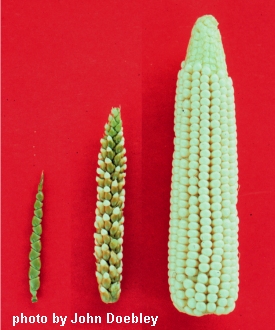
    Ancestral corn vs. modern corn


    Looks a bit different to me.

    How about wheat?


    Again, not so similar.

    Oh, but your cows are the same?

    Do they look like this?


    Not too meaty. And pretty mean.
    Do they look as different as this?


    And, as far as the bull, take away the hump and the extra neck flesh, which is a question of breed differentiation . . . and, yes, it looks similar to mine.

    Leave a comment:


  • cjppjc
    replied
    Re: PaNu - The paleolithic nutrition argument clinic

    Originally posted by ThePythonicCow View Post
    I wouldn't want to cross one of those cows. Even the cows on my dad's farm, a half century ago, didn't look like those of today. The udders are bigger today.


    By the way -- that "cow" in your post above is a "bull" ;). Even these days, bulls can be mean. Never turn your back on one, even if it has acted like a docile cow for many years. Bulls flip things (like 200 pound humans) into the air with their horns just for the fun of it.
    Your post reminded me of a time about 10 years ago. I had to cross a farm on foot. An average sized bull was there. The farmer kept saying don't let him know your afraid. Yea ok. Anyway, every 20 or so paces the bull would look at me and drop its head a little. The farmer had a small thin stick with him, and would swat the bull on the head every time. I kept wondering why the bull didn't just end the charade.

    Leave a comment:


  • ThePythonicCow
    replied
    Re: PaNu - The paleolithic nutrition argument clinic

    Originally posted by c1ue View Post
    Not too meaty. And pretty mean.
    I wouldn't want to cross one of those cows. Even the cows on my dad's farm, a half century ago, didn't look like those of today. The udders are bigger today.


    By the way -- that "cow" in your post above is a "bull" ;). Even these days, bulls can be mean. Never turn your back on one, even if it has acted like a docile cow for many years. Bulls flip things (like 200 pound humans) into the air with their horns just for the fun of it.

    Leave a comment:


  • c1ue
    replied
    Re: PaNu - The paleolithic nutrition argument clinic

    Originally posted by raja
    I think you comparison of the differences between ancestral and modern strains is a bit of exaggeration.

    A steak from pre-historic cattle and one of my grass-fed cows would probably be very similar. I raise emus, too, which have not been modified from the wild . . . and their meat is very similar to our cows' meat.
    I think the same would be true of grains.

    I know there are some differences in modern and ancient strains . . . but not as drastic as those differences between, for example, a bowl of berries and a bowl of sugar . . . which are very different. Or a loaf of white bread compared to whole wheat bread.
    That's why I suggest that you exaggerate.
    Well let's see:

    Ancestral corn vs. modern corn


    Looks a bit different to me.

    How about wheat?


    Again, not so similar.

    Oh, but your cows are the same?

    Do they look like this?


    Not too meaty. And pretty mean.

    Leave a comment:


  • Spartacus
    replied
    Re: PaNu - The paleolithic nutrition argument clinic

    I was writing about maximum age that the absolute oldest member of a tribe or town or city could live to be, not average expected age of death.

    bad teeth, infections, parasites, accidents, yadda, yadda, yadda would make it rare, but you might get one person reaching 70 or 80 every 5th or 6th generation in a hunter-gatherer tribe. Rare but occasionally would happen.


    Originally posted by c1ue View Post
    Spartacus,

    Sorry, but unless you believe the bible - prehistoric man did NOT live to 70.

    Or if he did, then all those primitive people in Brazil, New Guinea, etc are doing something really wrong.

    http://www.brazil-brasil.com/cvrjul97.htm


    did I write the stuff below you attribute to me? I don't recall typing that. It' s definitely not in the post you're replying to.

    Originally posted by c1ue View Post
    http://www.efficientfrontier.com/ef/104/bop.htm


    Were there individuals who lived longer? I'm sure there were a few just from statistics. But on average lifespans were NOT anything near modern ones. Note that above lifespan is basically pre-contact modern civilization. Since then it has gone down considerably because greater human densities = greater chances for disease.

    So please be aware of Rosseau-ian tendencies - they're bulls**t.


    Quote:
    Originally posted by spartacus View Post
    After agriculture, the biggest change in the human diet occurred only 200 years ago when food was subjected to industrial processes. We are not adapted to white sugar, refined grains, artificially hydrogenated oils and the plethora of chemicals added to our foods.
    ???? I don't recall typing this


    As for this - again you fail to take into account just how much time is needed for true genetic drift in humans. It is debatable whether even the 100,000 year span of agriculture is enough time for significant modification.

    Secondly if true genetic modification were able to occur so much faster, then I would equally expect different ethnicities to have difficulties interbreeding - certainly there has been isolation between many of the different races for 10,000 years or more.

    Lastly it is complete ridiculous crap that somehow diets from 200 years ago are somehow better than today because they're 'natural': grains and animals have been genetically modified the old fashioned way for millenia.

    The corn, wheat, cows, whatever we eat today resemble the 'ancestral' strains about as much as Fluffy the kitten resembles a sabre tooth tiger.

    The belief that going 'back to nature' is healthier is simply cherry picking convenient facts - a great marketing ploy.

    Leave a comment:


  • raja
    replied
    Re: PaNu - The paleolithic nutrition argument clinic

    Originally posted by c1ue View Post
    Lastly it is complete ridiculous crap that somehow diets from 200 years ago are somehow better than today because they're 'natural': grains and animals have been genetically modified the old fashioned way for millenia.

    The corn, wheat, cows, whatever we eat today resemble the 'ancestral' strains about as much as Fluffy the kitten resembles a sabre tooth tiger.

    The belief that going 'back to nature' is healthier is simply cherry picking convenient facts - a great marketing ploy.
    I think you comparison of the differences between ancestral and modern strains is a bit of exaggeration.

    A steak from pre-historic cattle and one of my grass-fed cows would probably be very similar. I raise emus, too, which have not been modified from the wild . . . and their meat is very similar to our cows' meat.
    I think the same would be true of grains.

    I know there are some differences in modern and ancient strains . . . but not as drastic as those differences between, for example, a bowl of berries and a bowl of sugar . . . which are very different. Or a loaf of white bread compared to whole wheat bread.
    That's why I suggest that you exaggerate.

    I suggest you read the work of Dr. Weston Price. That's what convinced me.

    Leave a comment:


  • raja
    replied
    Re: PaNu - The paleolithic nutrition argument clinic

    Originally posted by ThePythonicCow View Post
    While I entirely agree that Cheetos and Coke probably do not lead to good health, I suspect the reason you state for this is insufficiently subtle.

    The juice that I get from running organic veggies through my fancy Green Star twin gear juicer probably did not exist in that particular form in paleolithic times either. But I am confident that juice is healthy stuff.

    It is necessary and fitting, in order to substain billions of people on this planet, that we adapt our agriculture, food processing and diet in ways that were neither necessary nor possible in paleolithic times.
    PC, it's a question of adapting to our existing physiological requirements determined by our evolutionary heritage. Politics, population levels, morals have nothing to do with what constitutes an optimum diet for health. Now, if you want to eat a less-than-optimum diet because others in the world are starving, that's a choice . . . .

    Regards your juicing . . . .
    You know, a car doesn't run better on more oil. It needs just the right amount. Put more in than necessary and you run into trouble.
    It's the same with nutrition . . . when you eat partial foods, like juices, you may be getting too much or too little of certain constituents. When that happens, you are not aligning with your evolutionary nutritional heritage.
    You may think you are eating a "super-charged" food that has lots of x,y, or z . . . but that's just speculation. It is probable that the large amounts of x,y, or z may be disruptive in some way, or that the fiber you are not eating along with those elements is a problem.

    Leave a comment:


  • Sharky
    replied
    Re: PaNu - The paleolithic nutrition argument clinic

    Originally posted by Spartacus View Post
    exercise and eating mix is extremely complex.
    I'm interested in optimizing health and weight loss, rather than things like body building, which I'm sure adds a completely different perspective. I'm targeting lower levels of insulin, glucose, triglycerides and LDL, and higher levels of HDL (basically, reversing/preventing metabolic syndrome, aka Syndrome X).

    I'm simplifying, but it seems like the main health benefits of exercise are increasing insulin sensitivity and decreasing stress hormones. And since ketones are the body's preferred fuel, you want to end up with a metabolism that readily releases and burns fat, rather than stores it.

    From that perspective, if you exercise after eating, when the body has been flooded with insulin, which is metabolizing carbs into fat which gets stored in adipocytes, wouldn't it make it more difficult to simultaneously release the required fatty acids that you really want the body to use as fuel?

    If anything, wouldn't it be better to eat after you've started to exercise, when muscles are more receptive to using glucose directly, without insulin?

    Also, isn't there some trick with caffeine that you can use to clear triglycerides from the blood? I've heard some runners do that before a race, but I don't know the details.

    Leave a comment:


  • metalman
    replied
    Re: PaNu - The paleolithic nutrition argument clinic

    this thread is brilliant. what's it doing in rant & rave? we need new forum categories... suggestions...

    in addition to 'ask ej'

    to the community

    itulip experts...

    health
    housing
    autos
    etc.

    the old forum format was ok before but needs to be updated.

    Leave a comment:


  • Spartacus
    replied
    Re: PaNu - The paleolithic nutrition argument clinic

    exercise and eating mix is extremely complex.

    if you exercise hard for 40 minutes or less you get lots of anabolic hormonal response.

    If you're exercising to lose fat and you're less than 8% bodyfat (depends on the person - for some people the body starts holding on to its fat HARD at 10%), eating before working out MAY prevent release of fatty acids from adipocytes, unless you exercise a LONG time. Depends on what your adipose tissue likes to do in response to insulin + exercise-mediated catecholamines.

    if if you exercise hard for more than 40 minutes you start getting catabolic hormones (one reason why long distance athletes of any kind are skinny as h*ll).

    If you have been on a low carb diet for a while any carbs you eat from before a workout may never even get past your liver[1], which can store quite a bit of carbohydrate (and the liver gets first shot at the carbs because all your blood from your intestines goes to the liver before the rest of your body).

    And if you really are into the fine details, considerations like this go on and on ...


    Originally posted by Sharky View Post
    The "common wisdom" I've heard seems to be that it's best to exercise about 10 minutes after you eat, in order to drive the high blood post-meal sugar into muscle, rather than letting it build up in the blood, which helps minimize your insulin level.
    the answer should be "it depends ..."


    [1] but you will still get insulin from the time the glucose is in the blood, and you will get the cephalic insulin, and all that insulin may block fat mobilization ...

    http://www.google.ca/search?hl=en&q=...meta=&aq=f&oq=
    Last edited by Spartacus; May 22, 2009, 03:32 PM.

    Leave a comment:


  • Sharky
    replied
    Re: PaNu - The paleolithic nutrition argument clinic

    Originally posted by rogermexico View Post
    Once you are adapted to low carb intake (it may take 6 weeks or more, so go slowly) your mitochondria, including in your muscles and your brain, will literally proliferate and be more energy efficient. Gradually start doing your workouts with less and less carb consumption prior to exercise, to the point where you are solely working out in the fasting state. By fasting state I mean no food for at least 12 hours. Now, most people think I am a lunatic when I suggest this, but hear me out.

    I have talked about intermittent fasting as a complement to low carb eating to keep your insulin levels low. One reason they are complementary is once you are off the glucose/insulin hormonal yo yo, your ability to tolerate fasting is increased immeasurably. On a very low carb diet you are literally never hungry, in that desperate way you are when you are carb-dependent. Intermittent fasting is absolutely the best way to keep your insulin levels as low as possible (more on why that is good in the future)

    Working up to fasting workouts slowly, you will find that your performance (running time, max lifting) eventually equals or exceeds what you could do before with a meal 2 hours before, as your body becomes more adapted to fatty acid metabolism and less dependent on glucose .
    Can you say a little more about this? What happens differently when you exercise while fasting on your diet than when after you eat?

    The "common wisdom" I've heard seems to be that it's best to exercise about 10 minutes after you eat, in order to drive the high blood post-meal sugar into muscle, rather than letting it build up in the blood, which helps minimize your insulin level.

    Also, what would the effect be on triglycerides and other blood lipids after following the plan you suggest above? Even mild ketosis can generally bring triglycerides down substantially within 3 or 4 days. Would exercising after a 12 hour fast accentuate the process?

    Originally posted by rogermexico View Post
    When you want to climb K2, train in Leadville, Colorado, not Santa Monica.
    My turn for the tinfoil hat. Funny that you would pick those two cities. My dad's family came from Leadville, and I lived in Santa Monica for years.

    Leave a comment:

Working...
X