
 Tweet
Tweet
What if real estate prices remain the same for another decade? As I look at economic trends in our nation including the jobs we are adding, it is becoming more apparent that we may be entering a time when low wage jobs dominate and home prices remain sluggish for a decade moving forward. Why would this occur? No one has a crystal ball but looking at the Federal Reserve’s quantitative easing program, growth of lower paying jobs, baby boomers retiring, and the massive amount of excess housing inventory we start to see why Japan’s post-bubble real estate market is very likely to occur in the United States. It is probably useful to mention that the Case-Shiller 20 City Index has already hit the rewind button to 2003 and many metro areas have already surpassed the lost decade mark in prices. This is the aftermath of a bubble. Prices cannot go back to previous peaks because those summits never reflected an economic reality that was sustainable. A chart comparing both Japan and U.S. housing markets would be useful here.
Will the U.S. have 20 years of stagnant home prices?
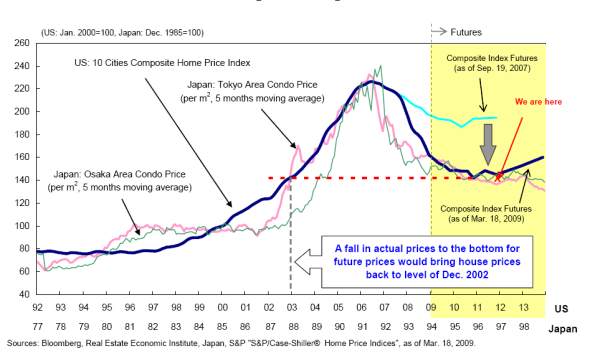
Source: Pragmatic Capitalism
This chart does a simple comparison of Osaka condo and Tokyo condo prices which does not reflect the entirety of the Japanese housing market. Yet the path seems very similar. Large areas with a real estate frenzy that hit high peaks and have struggled ever since. In fact, if we look at nationwide prices we realize that Japan has seen a 20 year bear market in real estate:
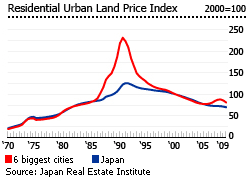
Japan urban land prices are back to levels last seen in the 1980s. You have to ask if there are parallels to our current condition. The first point we all have to agree on is that both economies had extraordinarily large real estate bubbles. For the United States the answer to this assumption is a big yes. We can run off a check list of how our real estate markets run similarities:
Japan and U.S. see real estate as poor investments
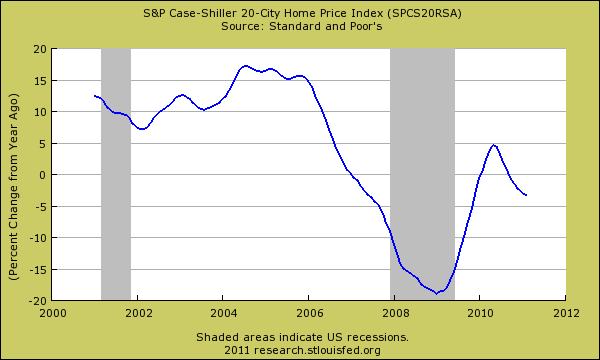
Our earlier assumption about the double-dip real estate recessions has now materialized through home price measures:
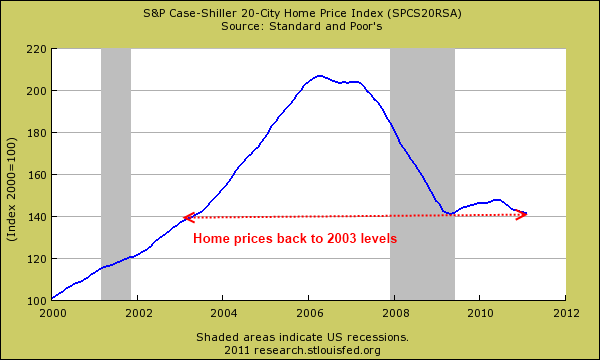
The above chart may not seem like a big deal to some but keep in mind the United States had never witnessed a year over year drop in nationwide home prices since the Great Depression. Not only has that been surpassed but home prices are now back to levels last seen 8 years ago. The lost decade is now nipping at our heels but what about two lost decades like Japan?
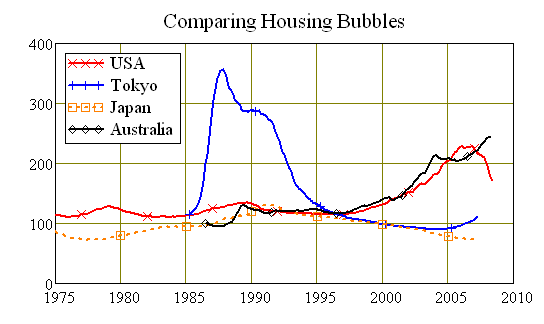
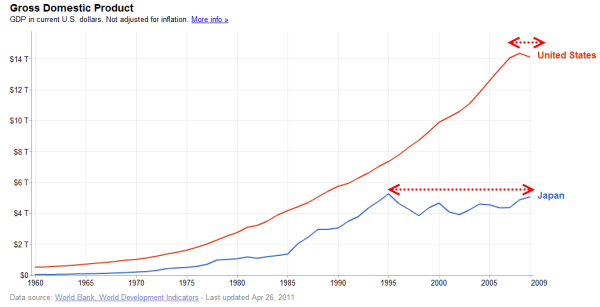
For some this may seem outrageous even to consider. The way I see it is that Japan was quickly catching up U.S. GDP in 1995 and many thought that it would at some point surpass our GDP. This was solidly the number two global economy for many years until China took that place last year. Yet the real estate bust has really been a drag on the economy for years moving forward:
Why has real estate been such a drag on the overall Japanese economy? First, Japan’s unemployment rate stabilized after these bubbles burst but it shifted to a large temporary or contract based employment economy. One third of Japanese workers operate under this new world. Relatively low security with employers and this has spiraled into lower income and money to finance home purchases. The fact that the U.S. has such a large number of part-time workers and many of the new jobs being added are coming in lower paying sectors signifies that our economy is not supportive of the reasons that gave us solid home prices for many decades. I think this is a key point many in the real estate industry fail to emphasize. How can home prices remain inflated if incomes are moving lower?
The question of affordability has always been at the center of this debate. Yet with government mortgages being the only option and banks now actually having to verify income Americans can only afford so much home when the gimmicks are removed like layers on an onion. This is why the double-dip is now fully here:
How much further will home prices fall? It can be that nationwide they fall only slightly more but in the end a lost decade is in the books. Two lost decades might be a real possibility given our demographic trends especially with baby boomers moving forward.
Massive inflation or stagnation moving forward?
One would think that with all the Bank of Japan bailout measures for the banks and government spending that inflation would run rampant in the Japanese economy. That was never the case:
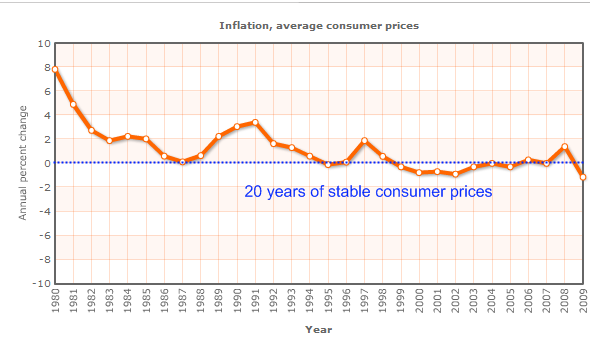
Now it is clear that at least by the above reported data, Japanese inflation has been virtually non-existent for the good part of 20 years. How does this compare with the U.S.?
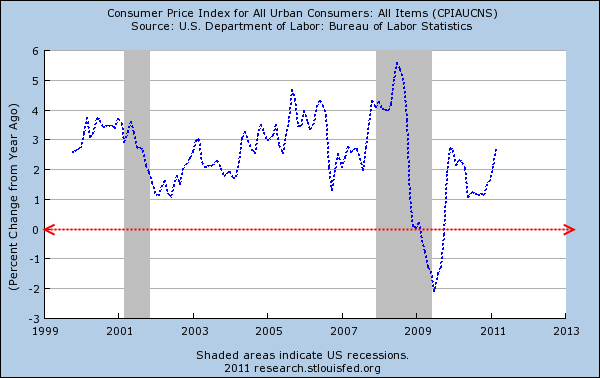
It is interesting to note that most of our inflation is coming from items ex-housing. As I have discussed the BLS does an interesting measure of home prices via the owner’s equivalent of rent. The reality is the above year over year changes in inflation in the U.S. are not coming from home prices.
Psychological aspects
Watching some of the global news I was seeing many young Japanese workers, some in their late 20s or early 30s, already resigned that they would never buy a home. They asked a young professional if he ever planned to buy a home and his response was (paraphrased):
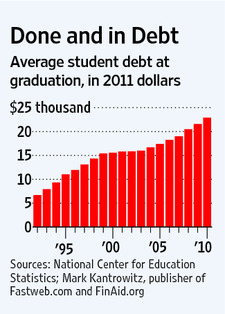
It was interesting to see the Wall Street Journal coming out recently with an article stating that the Class of 2011 will be the most indebted ever:
Higher median household incomes across the nation but at a time when gas costs $4 a gallon, grocery prices are increasing, college tuition is in a bubble, and the financial system operates with no reform and exploits the bubble of the day, it is hard to see why Americans would be pushing home prices higher.
http://www.doctorhousingbubble.com/j...united-states/
Will the U.S. have 20 years of stagnant home prices?
Source: Pragmatic Capitalism
This chart does a simple comparison of Osaka condo and Tokyo condo prices which does not reflect the entirety of the Japanese housing market. Yet the path seems very similar. Large areas with a real estate frenzy that hit high peaks and have struggled ever since. In fact, if we look at nationwide prices we realize that Japan has seen a 20 year bear market in real estate:
Japan urban land prices are back to levels last seen in the 1980s. You have to ask if there are parallels to our current condition. The first point we all have to agree on is that both economies had extraordinarily large real estate bubbles. For the United States the answer to this assumption is a big yes. We can run off a check list of how our real estate markets run similarities:
-Massive real estate bubble (check)
-Central bank bailing out banks (check)
-Bailed out banks keep bad real estate loans on their books at inflated values (check)
-Government taking on higher and higher levels of debt relative to GDP (check)
-Employment situation stabilizes with less secure labor force (check)
-Home prices remain stagnant (check)
Now the similarities are closely aligned in terms of banking policy. Our Federal Reserve followed a more aggressive path than Japan in bailing out our large banks. Yet all this did was make the too big to fail even bigger and exacerbated underlying issues in our economy. Four full years into the crisis and we are still dealing with a massive amount of shadow inventory. Remember the initial days when the talk was about working through the backlog of properties in a clean and efficient manner? Whatever happened to that? Banks operate through balance sheet accounting and it has made more sense to pretend the shadow inventory has somehow maintained peak prices while chasing other financial bubbles in other sectors. Not a hard way to make money when you can borrow from the Fed for virtually zero percent.-Central bank bailing out banks (check)
-Bailed out banks keep bad real estate loans on their books at inflated values (check)
-Government taking on higher and higher levels of debt relative to GDP (check)
-Employment situation stabilizes with less secure labor force (check)
-Home prices remain stagnant (check)
Japan and U.S. see real estate as poor investments
Our earlier assumption about the double-dip real estate recessions has now materialized through home price measures:
The above chart may not seem like a big deal to some but keep in mind the United States had never witnessed a year over year drop in nationwide home prices since the Great Depression. Not only has that been surpassed but home prices are now back to levels last seen 8 years ago. The lost decade is now nipping at our heels but what about two lost decades like Japan?
For some this may seem outrageous even to consider. The way I see it is that Japan was quickly catching up U.S. GDP in 1995 and many thought that it would at some point surpass our GDP. This was solidly the number two global economy for many years until China took that place last year. Yet the real estate bust has really been a drag on the economy for years moving forward:
Why has real estate been such a drag on the overall Japanese economy? First, Japan’s unemployment rate stabilized after these bubbles burst but it shifted to a large temporary or contract based employment economy. One third of Japanese workers operate under this new world. Relatively low security with employers and this has spiraled into lower income and money to finance home purchases. The fact that the U.S. has such a large number of part-time workers and many of the new jobs being added are coming in lower paying sectors signifies that our economy is not supportive of the reasons that gave us solid home prices for many decades. I think this is a key point many in the real estate industry fail to emphasize. How can home prices remain inflated if incomes are moving lower?
The question of affordability has always been at the center of this debate. Yet with government mortgages being the only option and banks now actually having to verify income Americans can only afford so much home when the gimmicks are removed like layers on an onion. This is why the double-dip is now fully here:
How much further will home prices fall? It can be that nationwide they fall only slightly more but in the end a lost decade is in the books. Two lost decades might be a real possibility given our demographic trends especially with baby boomers moving forward.
Massive inflation or stagnation moving forward?
One would think that with all the Bank of Japan bailout measures for the banks and government spending that inflation would run rampant in the Japanese economy. That was never the case:
Now it is clear that at least by the above reported data, Japanese inflation has been virtually non-existent for the good part of 20 years. How does this compare with the U.S.?
It is interesting to note that most of our inflation is coming from items ex-housing. As I have discussed the BLS does an interesting measure of home prices via the owner’s equivalent of rent. The reality is the above year over year changes in inflation in the U.S. are not coming from home prices.
Psychological aspects
Watching some of the global news I was seeing many young Japanese workers, some in their late 20s or early 30s, already resigned that they would never buy a home. They asked a young professional if he ever planned to buy a home and his response was (paraphrased):
“I don’t ever plan to buy. I saw my mother and father lose their marriage over trying to pay for the home payment for years. That was many of the big fights in our family. In the end we lost the home and I feel I lost my family. Why would I put pressure on myself for something like that?”
The millions of people that have lost their home and will lose their home are probably in households with children in many cases. Some may be in college and looking to buy in ten years. The notion that housing is always a great investment runs counter to what they saw in their lives. Will they even want to buy as many baby boomers put their larger homes on the market to downsize? Will they clear out the shadow inventory glut? Now I’m not sure how things are in Japan but many of our young households here are now coming out with massive amounts of student loan debt.It was interesting to see the Wall Street Journal coming out recently with an article stating that the Class of 2011 will be the most indebted ever:
“(WSJ) The Class of 2011 will graduate this spring from America’s colleges and universities with a dubious distinction: the most indebted ever.
Even as the average U.S. household pares down its debts, the new degree-holders who represent the country’s best hope for future prosperity are headed in the opposite direction. With tuition rising at an annual rate of about 5% and cash-strapped parents less able to help, the mean student-debt burden at graduation will reach nearly $18,000 this year, estimates Mark Kantrowitz, publisher of student-aid websites Fastweb.com and FinAid.org. Together with loans parents take on to finance their children’s college educations — loans that the students often pay themselves – the estimate comes to about $22,900. That’s 8% more than last year and, in inflation-adjusted terms, 47% more than a decade ago.”
Lower incomes, more debt, and less job security. What this translated to in Japan was stagnant home prices for 20 full years. We are nearing our 10 year bear market anniversary in real estate so another 10 is not impossible. What can change this? Even as the average U.S. household pares down its debts, the new degree-holders who represent the country’s best hope for future prosperity are headed in the opposite direction. With tuition rising at an annual rate of about 5% and cash-strapped parents less able to help, the mean student-debt burden at graduation will reach nearly $18,000 this year, estimates Mark Kantrowitz, publisher of student-aid websites Fastweb.com and FinAid.org. Together with loans parents take on to finance their children’s college educations — loans that the students often pay themselves – the estimate comes to about $22,900. That’s 8% more than last year and, in inflation-adjusted terms, 47% more than a decade ago.”
Higher median household incomes across the nation but at a time when gas costs $4 a gallon, grocery prices are increasing, college tuition is in a bubble, and the financial system operates with no reform and exploits the bubble of the day, it is hard to see why Americans would be pushing home prices higher.
http://www.doctorhousingbubble.com/j...united-states/
Comment