-
-
Re: New bulb mania
Years ago I was taking an exit off the freeway and here were about a half dozen guys digging up ice plant as fast as they could, throwing it into a pickup. Guess they were either re-stocking or had an order
-
Re: New bulb mania
That's funny - I thought ice plant was an alien invader that the State of California spends thousands, if not millions, trying to eradicate.Originally posted by don
They should have applied to ARRA...Comment
-
Re: New bulb mania
Said it was years ago. Was it that many years agoOriginally posted by c1ue View Post
Ice Plant - [Freeway Plant (California); Hottentot Fig, Sour Fig (South Africa); family Aizoaceae, Carpobrotus edulis]
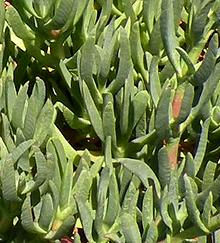
Native to South Africa, this spreading succulent with triangular leaves and brilliant magenta or yellow flowers is now familiar to everyone in California. In the early 1900s it was planted to stabilize soil along railroads, and in the 1960s was extensively planted by Caltrans for freeway landscaping - and now it's everywhere. Few, however, realize both leaves and fruits are edible. People started using this plant as groundcover at home. It was easy, just snap off a piece from a freeway onramp and plant it - but problems were soon realized. In the better watered home environment it attracted masses of slugs and snails. Then the rats came, appreciating the excellent cover, tasty fruits and delicious snails - and they spread the seeds far and wide. Meanwhile the plant took over every square inch of ground and spread across walkways and steps. Still, that's better than in South Africa where it's also infested with Puff-adders, Cape Cobras and other snakes intent on a dinner of fat tasty rat.
Caltrans stopped using it in the 1970s because it was becoming an aggressive invasive in the coastal environment - but there's still thousands of acres of it - and it's presenting the same problems in Australia and the Mediterranean region.Comment
-
Re: New bulb mania
So, people will be able to eat snails and vegetables instead of just tree bark. Awesome!Comment
For a concise, readable summary of iTulip concepts developed over the past 16 years and a vision of a challenging next decade and how to navigate it, read Eric Janszen's book "Post Catastrophe Economy".
Join the discussion of today's events with a wide range of professionals with an interest in economics and finance. Register to join our 50,000 plus member registered community from 78 countries today.
Subscribe to iTulip Select for access to the longest running, deep, accurate, and unvarnished macro economic trends analysis and forecasting available, since 1998.
- If this is your first visit, be sure to check out the FAQ by clicking the link above. You may have to register before you can post: click the register link above to proceed. To start viewing messages, select the forum that you want to visit from the selection below.
Working...

 Tweet
Tweet

Comment