
Re: Next Bubble or Last Hurrah? - Part I: Stocks and houses - Eric Janszen
you might enjoy a book called "how real is real?" by Paul Watzlawick, a psychiatrist and an oss officer in wwii, on the social construction of reality, social effects on cognitive psychology, disinformation, and so on. both a lot of fun and thought provoking.
-
Re: Next Bubble or Last Hurrah? - Part I: Stocks and houses - Eric Janszen
I'll admit, I bought into the AGW view wholeheartedly in the beginning. But I also have a slightly different view, though yours seems correct as well.Originally posted by EJ View Post
At first, I heard about Goldman Sachs buying into some derivatives market/exchange regarding carbon credits. Another Ponzi scheme, I thought.
And then I read about the conflict between Obama and China at Copenhagen...
And so, I thought, "who benefits?" China, and many other large manufacturing/polluting nations also have cheap currencies. One way to affect that trade advantage was to make the manufacturing process expensive. To "even out" the advantage. Environmental regs are a convenient tool for that end. In some way, it accomplishes the same thing a stronger yuan would.
As for Goldman Sachs and the carbon credits exchange - that screamed at me. How obvious the deception, and how easily I bought into it.
I question everything now. No knee jerk agreements or jumping on bandwagons, however convincing they are.Leave a comment:
-
Re: Next Bubble or Last Hurrah? - Part I: Stocks and houses - Eric Janszen
About time we get to that subject.Originally posted by EJ View Post
Low carbon energy controllers.
http://www.itulip.com/forums/showthr...conomy?p=33297Leave a comment:
-
Re: Next Bubble or Last Hurrah? - Part I: Stocks and houses - Eric Janszen
In such a book, there will be something for everyone to hate. After all, it attacks the very idea that one owns one's beliefs, that one has reasoned them for oneself. I only hope that I'm not too late. The way things are going in Libya, the Bullhorn is no doubt gearing up for an onslaught of a "we meant to do that" variety.Originally posted by Chris Coles View PostLeave a comment:
-
Re: Next Bubble or Last Hurrah? - Part I: Stocks and houses - Eric Janszen
I recommend you start by reading the original analysis of the American system of propaganda, Edward Bernays' 1928 book Propaganda.Originally posted by LazyBoy View Post
The theory cannot be made convincingly in a few posts here. The challenge is to prove the existence of a system of propaganda the key evidence of which is the absence of certain topics and frameworks of debate.
For example, why is this issue is not openly debated in the US as it is in other countries?Leave a comment:
-
Re: Next Bubble or Last Hurrah? - Part I: Stocks and houses - Eric Janszen
I agree with all of your points until "People act in their self interest."Originally posted by vinoveri View Post
The point of the Bullhorn is to get the masses to act against their own interests but instead in the interests of an interest group.Leave a comment:
-
Re: Next Bubble or Last Hurrah? - Part I: Stocks and houses - Eric Janszen
The most interesting thing I learned in my several years of research into the AWG issue is that the strongest adherents to AGW theory hold liberal views generally while opposition to the theory is largely conservative, as if the question was political rather than scientific.Originally posted by we_are_toast View Post
My position is that there is insufficient scientific evidence to prove or disprove AGW. Mind you, as a recipient of a BS in Resource Economics I have since college believed intuitively that dumping tons of carbon emissions into our tiny atmosphere from the burning of fossil fuels cannot possibly be a good thing for the environment, and intuitively I still believe that it is bad. But intuition is not science. Everywhere I looked as I studied the AWG issue I found the telltale signs of a Bullhorn sales and marketing operation, from the co-opting of the scientific community with research funding to the selection of TV producers with AGW sympathies. One source I spoke with who is also agnostic on the question said his research shows that beliefs are even more emotionally driven than by inclination toward liberal or conservative views. Polls show that a large percentage of Americans change their view on AGW based on the weather: when it's hot they believe and when it's cold they don't.
But why? Who is using the threat of rising oceans to sell AGW in 2011 like the dream of home ownership to sell the securitized debt that financed the housing bubble in 2002? To what end? Who gains and who loses from policies to reduce carbon emissions from burning fossil fuels?
The reason I haven't made any previous statements about AGW is that I'm certain holding a rational debate on a topic as charged with religious fervor is as futile as the gold bubble versus no gold bubble debate, the inflation versus deflation debate, or any of the other nonsense debates that the US media frames that I've wasted umpteen hours on over the years that divert us from the issue.
It's time to get to the bottom of things.
Ever wonder why there isn't a "peak oil versus no peak oil" debate in the media? I believe the answer is in the AGW misdirection.Last edited by FRED; February 21, 2011, 05:38 PM.Leave a comment:
-
Re: Next Bubble or Last Hurrah? - Part I: Stocks and houses - Eric Janszen
EJ, for the very simple reason that he can see beyond his own shortcomings; and, moreover, has clearly demonstrated that skill to us for some years now. I will trust someone that knows his shortcomings and can have the strength to be able to allude to them. None of us is perfect; so who would trust the perfect man?Well put!
But who then is qualified to write the book EJ proposes to write?Leave a comment:
-
Re: Next Bubble or Last Hurrah? - Part I: Stocks and houses - Eric Janszen
Granted that propaganda and marketing are deliberately used, from an early age on, to form and reinforce belief systems. Recognizing this with the end of mitigating/combatting it is important, I agree. Critical and scientific thinking and analysis are not taught nor held in the highest esteem in our culture as you know. Sentiment and sound bites carry the day.Originally posted by EJ View Post
I believe though what you are really pointing to can be handled by always asking the question "Cui Bono?" (in whatever language suits), and keep asking that question until you arrive at the one or multitude of causes. People act in their self interest, and by golly one man's interest may be to another man's detriment, unfortunate, but true nonetheless.
Your further points however, with respect, smell of modern doubt and it consequence: relativism.
Things do have causes, always (even if they are not readily identifiable completely). The Principle of Causality. I choose to belief that axiomatically, call it a priori knowledge, common sense, a sine qua non, for rational inquiry, what have you. I don't need to "deconstruct" this belief as I remember how I constructed it.
Skepticism is different than doubt. Skepticism in good faith can lead to truth. Doubt, i.e., of Truth, leads to belief in the loudest bullhorn (as you describe) and to the political and ecnomic tyranny and individual despair.
Question? Absolutely, but don't Doubt (that there is Truth that can be apprehended by reason).
Perhaps "There's no Market for Truth" would be an appropriate title.
Great Pics by the way!Leave a comment:
-
Re: Next Bubble or Last Hurrah? - Part I: Stocks and houses - Eric Janszen
Well put!Originally posted by Chris Coles View Post
But who then is qualified to write the book EJ proposes to write?Leave a comment:
-
Re: Next Bubble or Last Hurrah? - Part I: Stocks and houses - Eric Janszen
You make EJ's point for him; his brief tells us that all of our opinions are manipulated to one degree or another by outside influences beyond our control. So? So EJ suffers like everyone else.Originally posted by we_are_toast View PostLeave a comment:
-
Re: Next Bubble or Last Hurrah? - Part I: Stocks and houses - Eric Janszen
How very, very sad to see you make this incorrect statement.Originally posted by EJ View PostLeave a comment:
-
Re: Next Bubble or Last Hurrah? - Part I: Stocks and houses - Eric Janszen
I understand the confusion that my assertion may produce in the minds of some readers.Originally posted by Mn_Mark View Post
First let me say that I came to this conclusion after interviewing a half dozen former health insurance industry claim managers. They told me that not paying customers for the insurance product they purchased was the whole point of their role as administrators, and a major source of profits for health insurance companies. They were selected for the job for their unique quality of insensitivity to the suffering that this practice caused the customers they worked with, who were often very ill.
Second, I'll note that most Americans don't know this about their health insurance industry for the same reason most did not know from the early 1920s until the 1980s that cigarette smoking will kill you. Health insurance as a product has been sold by health insurance companies much as consumer and mortgage debt was sold the banking industry since the late 1970s, and exactly as cigarette smoking was sold by the tobacco industry since the 1920 until the federal government finally started to crack down in the 1970s.
How to successfully sell a dangerous product that kills millions of people.
1. Employ trusted public icons to sell the message.

And respected authorities to sell the message.
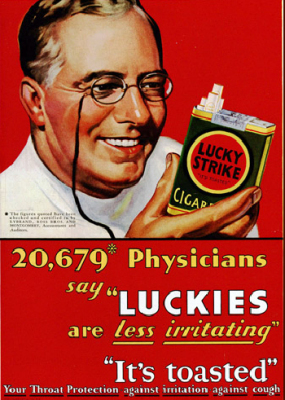

And famous movie actors in cross-publicity programs, exchanging free cigarette product placements for free movie advertising.



2. Use false messaging, such as by associating smoking with health.
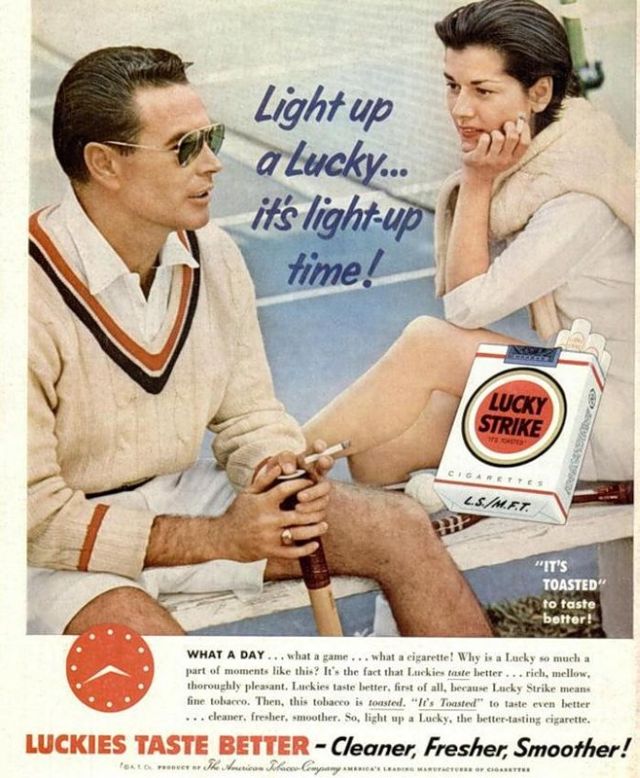
Such as claiming scientific evidence that smoking is safe.
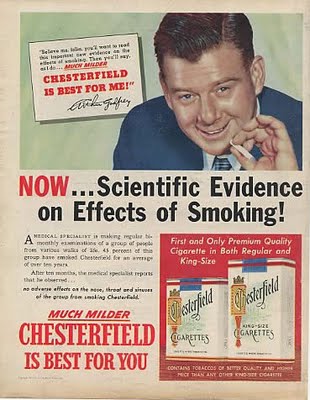
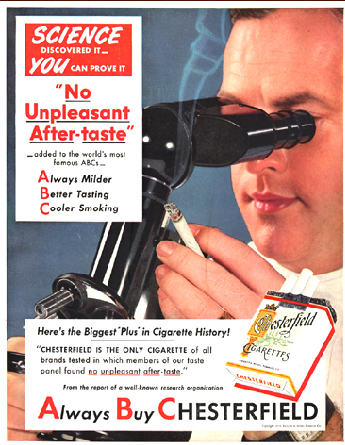
Such as planting false information about the safety of smoking in the press.

3. Profit.
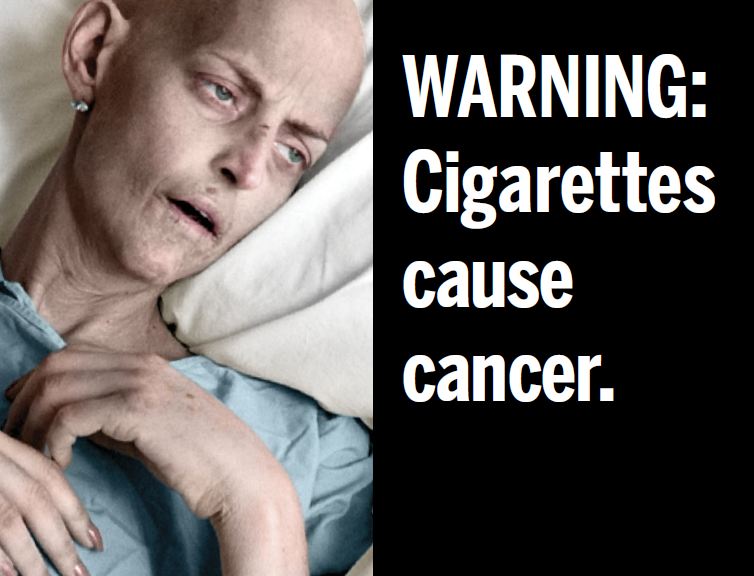
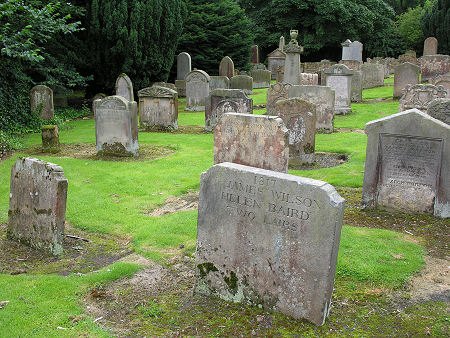
It's tough to execute a libertarian ideal of a society founded on individual responsibility when we have a mass media system of product sales and marketing that can convince millions of American adults that smoking is cool and sophisticated and safe, or that racking up $100,000 on your credit cards and taking out a mortgage that consumes 66% of your income makes you a responsible, successful, and accomplished person, or that voting to take rent seekers out of the health care loop is an affront to the American free enterprise system -- and 99% of the population doesn't even know the system exists.
I've long been fascinated by how consumer rights protection generally, whether tobacco or credit products, has become framed as a conservative versus liberal issue, as if some group doesn't want the consumer debt issue discussed for what it is, the successful sales and marketing of credit products by credit product manufactures.
There are two challenges facing anyone who attempts to educate the public on this topic: one, to convince the reader that 90% of human behavior is driven by unconscious impulses not by free will; and two, that our unconscious has been consciously shaped by others, that many of our own most treasured beliefs were constructed by forces beyond our own will, including the belief in free will itself.
This book that I have in mind is thus a very difficult project from the start. It begins by asking readers to set aside, to suspend, the core belief that their beliefs are their own.
The object of the book will be to allow anyone to deconstruct the sources of their own beliefs so that they can they reconstruct them but consciously, so that they are truly their own, and they are in the end truly free.
Finally, readers can be forgiven for wondering what any of this has to do with economics, markets, and investing. I can make the case that if we understand how beliefs were shaped in the collective mind of the American people in the past, we can determine the beliefs that are being shaped in our minds now, by whom, and why, and use that information for forecasting purposes. Consider the idea of anthropogenic global warming or AGW. There is no conclusive science to back the theory, but many of us believe in it passionately. How did that come about? Who benefits? If we can answer that question we know everything we need to know about how to invest in energy in the future, because AGW isn't about pollution, the output of energy consumption, it's an indirect tool for managing the input, the carbon-based fuels themselves, at a time when a direct approach may produce the crisis that the AGW approach is attempting to diffuse: Peak Cheap Oil.Last edited by FRED; February 21, 2011, 05:22 PM.Leave a comment:
-
Re: Next Bubble or Last Hurrah? - Part I: Stocks and houses - Eric Janszen
Just out of curiosity, how would you describe your own political views? You seem very intent on bashing libertarians.Originally posted by c1ue View Post
Is this "reality" based on anything other than your authoritative assertion?Originally posted by c1ue View Post
Does this reality apply to all insurance companies or simply health care?
Yes, they are crooks, no doubt about it. They have rigged legislative/judicial system to protect themselves, for example McCarran–Ferguson Act. Most of what you mention are deceptive or fraudulent practices. I spend a good deal of my time dealing with these issues. I also would benefit from more sick people having insurance. Nonetheless, I still don't understand why not providing insurance to people who you know in advance will cost more than they will pay in premiums is somehow illegal or immoral.Originally posted by jkLeave a comment:


Leave a comment: