Announcement

Collapse
No announcement yet.

The Elusive Canadian Housing Bubble

Collapse
X
 
  • Filter
  • Time
  • Show
Clear All
new posts

  • touchring
    replied
    Re: Defending Krugman

    Originally posted by Milton Kuo View Post
    While VancouverGoinUp touted real estate in Vancouver, he never offered any sensible explanation/analysis as to why it would continue to go up or why it wouldn't be dangerous to speculate in a market where it was obvious that housing prices were seriously out of whack relative to household income. Furthermore, comments such as "the best place on earth" didn't exactly give anyone any confidence that he was serious or honest about "investing" in Vancouver real estate.

    That said, I do wish that I better understood what was to happen after the 2008 crash. I would have gone all-in into the stock market had I known the Fed really would have as many and as large QE programs as necessary to force housing and stock markets up. Having a large cash position in 2013 and 2014 while the general indices roared has been extremely unpleasant. The worst thing about this run-up versus is that, unlike 1998, I'm not certain that there will be a crash. One could have sat out the dot-com bubble knowing full well that most of those stocks would either go bust or crash.

    For me, anyway, witnessing two extremely nasty downturns (one of them a once-in-a-lifetime event) has made me much more risk averse. It seems that for every recession in my lifetime, it paid very handsomely to go to all-cash rather than hold.

    I was in a similar situation after I lost almost all my cash chasing a stock that collapsed due to fraud. I just started work at that time, the loss though not significant in absolute terms, had a deep psychological impact on me. After that and the dot com bust, which I missed entirely, I decided to go "macro", and that's how I bumped into iTulip.com.

    The stock market is an unfair game, retail investors like us won't know what the insiders and billionaire investors are doing (to pump up the stock or dump) or know the future changes to regulations and politics that can affect stock prices - for example, we won't know if politicians decide to bailout a particular bank. ;)

    I've decided to follow billionaire investors such as Sir Buffett, among others. I also found out that they are not always right so I tried to diversify across different industries and even across different countries so any mistake won't wipe out everything. I made sure that any stock is not more than 5% of my total portfolio including cash. I also checked insider trades - but it's not always right. Insiders can also misjudge the market and lose their pants - which happened to many oil executives just recently.

    After reading Chris Cook's video on oil prices I now know that a market can mis-price a stock or commodity for a significantly long period of time, like 5-8 years, so it's possible for a stock to remain depressed and below valuation for a significant period of time and likewise be overvalued for a lengthy period of time. To minimize risk, it's necessary to buy 10-20 years into the future.

    I'm not sure if you've been to China to see some of the empty real estate projects. Even back then in 2008 I felt they are overbuilding offices, but after 2009, they built even more so it is impossible to time the market.
    Last edited by touchring; January 06, 2015, 04:12 AM.

    Leave a comment:


  • jk
    replied
    Re: Defending Krugman

    as much as i too say to myself "woulda, shoulda, coulda," i'd rather lose an opportunity than suffer a loss. it's much harder to make back losses, than to wait for the right risk/reward.

    Leave a comment:


  • don
    replied
    Re: Defending Krugman

    It seems that for every recession in my lifetime, it paid very handsomely to go to all-cash rather than hold.
    ZIRP and QE made sure that didn't happen . . . . (from a fellow cash-position hit and run victim)

    Leave a comment:


  • Milton Kuo
    replied
    Re: Defending Krugman

    Originally posted by jk View Post
    i guess if we keep predicting the burst of the vancouver bubble, eventually we'll be right. how many years ago were we ridiculing vancouvergoinup?
    While VancouverGoinUp touted real estate in Vancouver, he never offered any sensible explanation/analysis as to why it would continue to go up or why it wouldn't be dangerous to speculate in a market where it was obvious that housing prices were seriously out of whack relative to household income. Furthermore, comments such as "the best place on earth" didn't exactly give anyone any confidence that he was serious or honest about "investing" in Vancouver real estate.

    That said, I do wish that I better understood what was to happen after the 2008 crash. I would have gone all-in into the stock market had I known the Fed really would have as many and as large QE programs as necessary to force housing and stock markets up. Having a large cash position in 2013 and 2014 while the general indices roared has been extremely unpleasant. The worst thing about this run-up versus is that, unlike 1998, I'm not certain that there will be a crash. One could have sat out the dot-com bubble knowing full well that most of those stocks would either go bust or crash.

    For me, anyway, witnessing two extremely nasty downturns (one of them a once-in-a-lifetime event) has made me much more risk averse. It seems that for every recession in my lifetime, it paid very handsomely to go to all-cash rather than hold.

    Leave a comment:


  • GRG55
    replied
    Re: Defending Krugman

    Originally posted by jk View Post
    i guess if we keep predicting the burst of the vancouver bubble, eventually we'll be right. how many years ago were we ridiculing vancouvergoinup?
    I went back to have a look. His first post was, ironically enough, on August 3, 2007. Six days later the credit markets seized up when BNP Paribas made this announcement:

    The complete evaporation of liquidity in certain market segments of the US securitisation market has made it impossible to value certain assets fairly regardless of their quality or credit rating. The situation is such that it is no longer possible to value fairly the underlying US ABS assets in the three above-mentioned funds. We are therefore unable to calculate a reliable net asset value (“NAV”) for the funds.

    In order to protect the interests and ensure the equal treatment of our investors, during these exceptional times, BNP Paribas Investment Partners has decided to temporarily suspend the calculation of the net asset value as well as subscriptions/redemptions, in strict compliance with regulations, for the following funds:

    • Parvest Dynamic ABS effective 7 August 2007, 3pm (Luxembourg time)
    • BNP Paribas ABS Euribor and BNP Paribas ABS Eonia effective 7 August 2007, 1pm (Paris time)

    The valuation of these funds and the issue/redemption process will resume as soon as liquidity returns to the market allowing NAV to be calculated.

    In the continued absence of liquidity, additional information on the envisaged measures will be communicated to investors in these funds within one month of today


    His last post was the start of this thread. Throughout all the perturbations of the GFC he was steadfastly bullish on Vancouver real estate. I wonder if he heeded is own advice and kept buying.

    http://www.itulip.com/forums/showthr...810#post184810

    Leave a comment:


  • jk
    replied
    Re: Defending Krugman

    i guess if we keep predicting the burst of the vancouver bubble, eventually we'll be right. how many years ago were we ridiculing vancouvergoinup?

    Leave a comment:


  • GRG55
    replied
    Re: Defending Krugman

    "604" is the area code for the Lower Mainland of British Columbia, Canada, which includes the greater Vancouver district.


    2015 in 604

    January 4th, 2015


    Let’s say your family earns $71,140. If you live in BC, the take-home is $56,261 and your marginal tax rate is just a tad less than 30%. That’s under $4,700 a month, for housing, food, clothes, booze, lottery tickets, insurance (same thing), savings, car, gas and a trip home once a year to see your bewildered folks in Estevan.

    So, could you afford a house worth a million?

    Hardly. It’d be a miracle to swing a place costing half that, since the mortgage payments and property tax alone, after a 10% down, would be $2,700 a month, or 57% of your total net income. That’s for a $500,000 house.

    By the way, $71,140 is the median family income in Vancouver. It’s among the lowest of any major Canadian city.

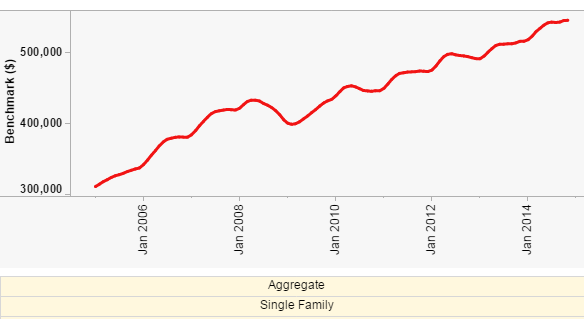
    This week residents of our most delusional province will receive little letters from the BC Assessment people telling them the average house on the East side (where the poor people live) is now worth $993,000. On the West side, the average is $1,812,000. Prices in the latter are up 12.4% in a year, and in the slummy bits, ahead 11.3%. The average assessment for all houses in the entire region increased over the past 12 months by 11%, says the government (guaranteeing healthy future property tax increases).

    Over the same period average wages in BC grew by 3.1%, while inflation was 2%. But when houses jump 11%, or six times the cost-of-living increase, it makes you wonder where the money is coming from. The bigots and deniers will tell you this boatload of cash is from China. But that makes no sense. There were about 28,000 real estate transactions in Metro Vancouver last year and the best numbers available indicate that over 90% of all the buyers were locals.

    Instead, this is the source of funds:

    More...

    Leave a comment:


  • GRG55
    replied
    Re: Defending Krugman

    Canada's version of the "Ownership Society":

    Leave a comment:


  • don
    replied
    Re: Defending Krugman

    Dr. Housing Bubble weighs in . . .

    As the year comes to a close, it is useful to put things into perspective. Sure, California has a love affair with real estate and we go through our traditional booms and busts. $700,000 crap shacks now litter the landscape but there are fewer and fewer lemmings taking the plunge. In Canada there was no correction. In fact, households continue to go into deep debt to purchase real estate. The argument goes that mortgage standards are much tighter in Canada so therefore, they are much more enlightened when it comes to financing homes. People forget that the bulk of the 7,000,000 foreclosures in the US came in the form of standard loans. Garbage loans imploded in more dramatic fashion but people lost their homes because the economy shifted. At that point, it merely meant covering the monthly nut. We were housing dependent and that market contracted aggressively.

    Canada is housing and oil dependent. And oil just got a big kick to the shins.
    In Canadian debt we trust
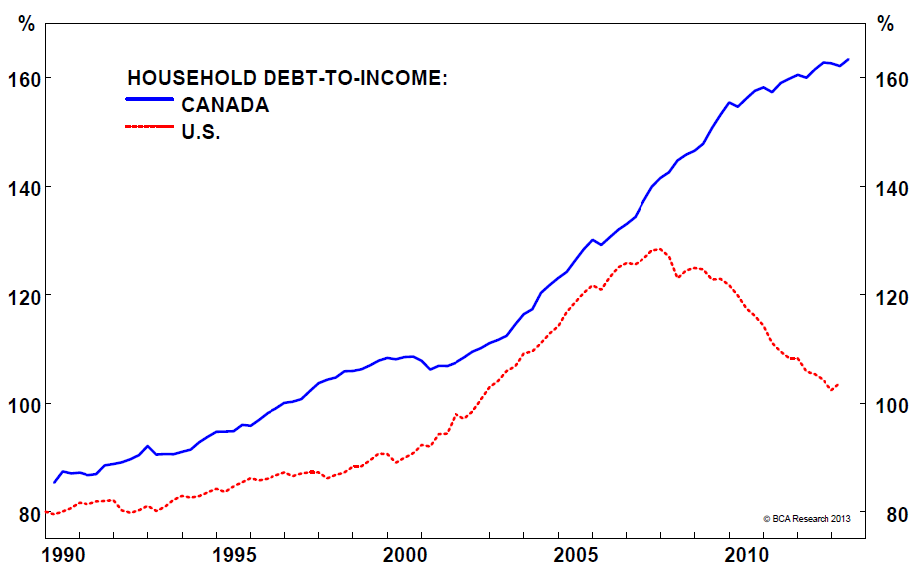
    There was an inflexion point for US markets when household debt surpassed household income. People kept saying it was a liquidity crisis initially but it was truly a solvency crisis. People took on too much debt and were walking on a financial tightrope. In the US, this peaked above 120 percent. Canada is well on its way above 160 percent:


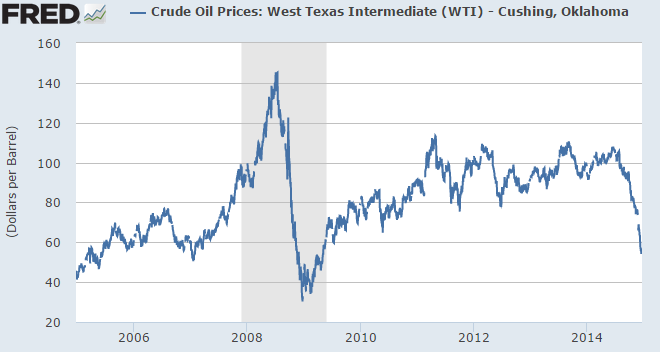
    Basically Canadians are deeper in debt relative to their income. And a large part of this debt is housing related. A large part of the economy is also tied to oil and as you may know, oil just took a massive cut:


    It was interesting to hear that we would never see oil drop below $100 a barrel. Oil is now trading at $52.84 a barrel. Similar arguments were made about US housing never having one negative year-over-year price drop until we did.

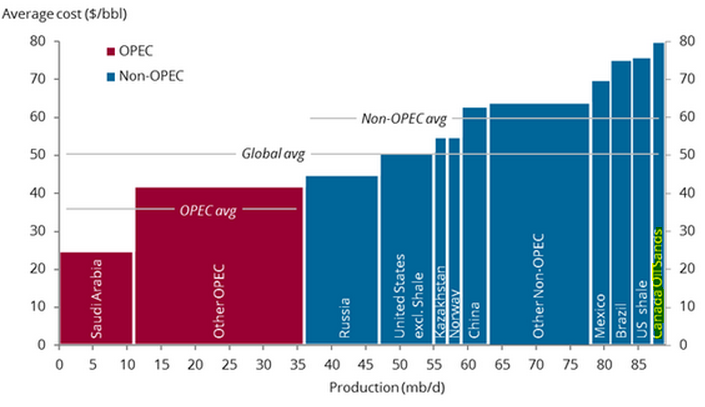
    Large part of Canada’s oil is costly to extract
    A large portion of Canada’s oil is costly to extract. With oil sands for example oil would need to be at $80 a barrel to make a profit:


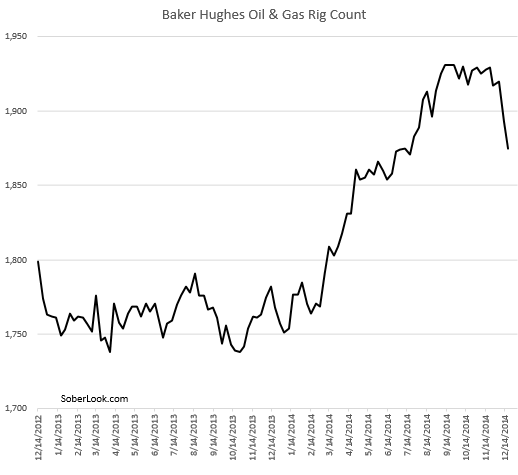
    I doubt people want to run money losing operations for a long period of time. So it is no surprise that oil rigs are closing:


    Fewer jobs and less money. And for a large part of the Canadian economy, much of this money has been flowing into housing. In Canada, there seems to be a cult belief that housing simply will not correct. They are full on drinking the good old tasting real estate Kool-Aid. In the US, we already lived that correction and understand that yes, housing does go through booms and busts especially when debt is used to supplement a lack of income growth. As the debt to income chart shows, many US households were forced to deleverage via foreclosures and bankruptcies.

    Home prices out of sync

    Home prices are fully out of sync with incomes. Take a look at this rise in home values:


    Canada has enjoyed many years of the global commodities boom and now finds itself contending with a market full of debt and inflated housing values. Short of oil rising back up to $80 a barrel and higher Canada is likely going to face some short-term pain. The housing market is due for a correction. Those of us in California realize that booms and busts can occur all of a sudden but the events leading up to this are largely foreseeable.
    I’m sure many in Canada assume that home values will simply continue to go up and just because banks check incomes doesn’t mean squat. As the above data shows, households are already deep in the quicksand of massive debt. It is all dandy when everything is going up including oil. When oil gets smashed as it did, it came on quickly.

    Canada has their versions of $700,000 crap shacks usually in the form of condos. Hey, at least with a crap shack you don’t have to share a common wall. When you look at the Canadian housing market it makes the US look like a frugal uncle.

    Leave a comment:


  • lakedaemonian
    replied
    Re: Defending Krugman

    Originally posted by ProdigyofZen View Post
    Not to mention that the US and various other Western Democracies have perpetual property rights that they can hand down to their children and their children and so on. This is not always so in China even if they "bought and own" a condo in the city.

    Arcadia the Chinese Beverly Hills
    I just had a coffee with a politically connected lawyer/facilitator/rapscallion who's entire job now consists of working on behalf of money'd Chinese from Guangzhou.

    His practice is almost exclusively property related and he's now juggling a small luxury vehicle fleet(Mercedes E and S class mostly, nothing insane or gaudy) his clients have purchased solely for the limited time they spend here at the moment.

    He did mention how due diligence on the source of foreign money is a growing "know your customer" requirement.

    And it sounds like the Chinese are not prepared to allow egregious/high profile graft beneficiaries to hide out down here, according to his political access. They will be extradited.

    Which has led him to retain a Vietnamese PHD who is regarded as a leading expert in regional money laundering.

    The plot thickens.

    He says business is booming, he is drowning in work, and that his increased fee structure hasn't batted an eye.

    It truly does sound like a small slice of that "Great Wall of Money".

    I've asked him if he's noticed any "lifeboat activity" such as a sharp uptick in transfers into his trust account, requirements for very short notice property deals, etc.

    It was certainly an interesting conversation.

    Leave a comment:


  • Milton Kuo
    replied
    Re: Defending Krugman

    Originally posted by ProdigyofZen View Post
    Not to mention that the US and various other Western Democracies have perpetual property rights that they can hand down to their children and their children and so on. This is not always so in China even if they "bought and own" a condo in the city.

    Arcadia the Chinese Beverly Hills
    Are you talking about the 99-year land leases? Property rights in the U.S. are not particularly perpetual themselves: property taxes, home owners association fees, and (admittedly minor) risks of eminent domain are all things that can make holding onto property in the U.S. more difficult than it would seem.

    Barring severe political upheaval in China, I doubt the wealthy in China who made their money honestly need to worry very much about losing their property.

    Leave a comment:


  • ProdigyofZen
    replied
    Re: Defending Krugman

    Originally posted by EJ View Post
    A friend who runs a hedge fund in NYC emigrated from mainland China with his family in 2005. He explains the movement by Chinese citizens to buy U.S., Canadian and European real estate with cash simply: for these Chinese families, China was the country that afforded them the opportunity to make money but is a terrible place to live: pollution, unsafe food, traffic congestion, and local corruption make quality of life there poor. They want the quality of life that we as Americans and Europeans take for granted and can afford to buy their way into it.
    Not to mention that the US and various other Western Democracies have perpetual property rights that they can hand down to their children and their children and so on. This is not always so in China even if they "bought and own" a condo in the city.

    Arcadia the Chinese Beverly Hills

    Leave a comment:


  • ProdigyofZen
    replied
    Re: Defending Krugman

    I will say that from personal experience my girlfriends (Chinese) father was forced to sell their house in SF very close to the Golden Gate Bridge (I think but basically a desirable area) when the tech bubble blew up. They are not US citizens and reside in Manila.

    Leave a comment:


  • Polish_Silver
    replied
    Re: Defending Krugman

    Originally posted by EJ View Post
    A friend who runs a hedge fund in NYC emigrated from mainland China with his family in 2005. He explains the movement by Chinese citizens to buy U.S., Canadian and European real estate with cash simply: for these Chinese families, China was the country that afforded them the opportunity to make money but is a terrible place to live: pollution, unsafe food, traffic congestion, and local corruption make quality of life there poor. They want the quality of life that we as Americans and Europeans take for granted and can afford to buy their way into it.
    Most interesting to me is that even the chinese 1% want the western "public goods" that our lower middle class has without any effort, and they apparently cannot get that in China at any price.

    Leave a comment:


  • Polish_Silver
    replied
    reading Chinese minds

    Originally posted by EJ View Post
    The difference is that Japan is a country run by elected officials and China is not.

    Japan's over-investment in U.S. trophy commercial real estate was hubris.

    There's none of that with the Chinese today. They are buying residential real estate in the U.S., Canada, Australia and the UK. Also to a lesser extent across Europe.

    All of these countries are politically stable democracies, and some safer than others for personal investment.

    Who are the persons investing their wealth outside of China?

    They are the families that have benefited the most from the "economic miracle" that is China for the past 20 years.

    What does that tell you about their confidence in the China that they have built?

    At best they are hedging their bets.

    At worst they are getting out of Dodge.
    That is fairly logical. If they wanted less crowded conditions, they could buy land in Boondocks, China.

    But if they lack confidence in China, what is the reason?


    Lack of trajectory towards personal freedom and democracy?

    The anti-corruption campaign is a sham?

    China's economic model is inherently unsustainable?

    Poor ecological conditions?

    Over population ?

    Leave a comment:

Working...
X