Announcement

Collapse
No announcement yet.

Denial springs eternal

Collapse
X
 
  • Filter
  • Time
  • Show
Clear All
new posts

  • Slimprofits
    replied
    Re: Denial springs eternal

    Dow Chemical to raise prices, again

    Scrambling to preserve its margins, the Midland, Mich.-based chemical giant said it would boost prices in July by as much as 25% and effective Aug. 1, add freight surcharges of $300 per truck shipment and $600 per rail shipment.
    Newell Rubbermaid to drop products, raise prices

    ...Newell Rubbermaid said Tuesday it will exit several different lines, raise prices on others by as much as 22 percent and cut an unspecified number of jobs.

    "In recent weeks, input cost inflation has accelerated dramatically, especially in resin, which is the largest single component of our cost of goods," Mark Ketchum, Newell Rubbermaid's president and chief executive, said in a statement.

    "Unfortunately we don't see this situation reversing course. In categories where resin is a high percentage of cost of goods sold and the consumer's willingness to pay for innovation is low, the economics are no longer viable."

    Like other companies, Atlanta-based Newell Rubbermaid — whose consumer brands include Sharpie pens, Rubbermaid trash bins and Goody health and beauty products — has sought to deal with rising costs for raw materials by cutting expenses and raising prices on some products.

    Newell Rubbermaid has been particularly hit because it's a heavy user of plastics.

    ...Newell Rubbermaid, which uses 700 million pounds of resin a year, has seen costs for that raw material go up 60 percent in the last year, said David Doolittle, a company spokesman.
    Minerals Technologies raising price of talc

    July 07, 2008: 01:34 PM EST

    NEW YORK (Associated Press) - Minerals Technologies Inc., which makes specialty mineral products, said Monday it is raising the price of talc by as much as 10 percent because of higher fuel and energy costs.

    The company's Barretts Minerals Inc. subsidiary will increase prices for talc produced at its Barretts, Mont., facility by 8 percent to 10 percent, depending on the product.

    The change becomes effective Aug. 1, or as permitted by contract.

    July 02, 2008: 02:16 PM EST

    NEW YORK (Associated Press) - TOR Minerals International Inc., which makes pigments and specialty minerals, said Wednesday it is raising prices on all its titanium dioxide color pigments to offset higher costs.

    Effective July 1, or as permitted by contracts, prices for all titanium dioxide color pigment products will increase by as much as 5 cents per pound. This price increase is in addition to price increases put into effect in January.
    P&G raising prices

    Cincinnati-based P&G will raise the price of goods from Pepto Bismol to Tide detergent to Gillette shave gel by as much as 16 percent in September or October, spokesman Paul Fox said this morning.
    Last edited by Slimprofits; July 17, 2008, 12:34 AM.

    Leave a comment:


  • ocelotl
    replied
    Re: Denial springs eternal

    Originally posted by Finster View Post
    It wasn't intended to be a commentary on NAFTA per se, but I'm gonna have to go along with Zoog on this one. Anything that requires thousands of pages to define "free trade" can't really be very free. In general, a forcible intervention in the marketplace - all the more so one that requires an army of lawyers and bureaucrats to interpret and implement - is a lose-lose proposition for the market participants at least on a net basis. If, for example, you and I were to engage in a free exchange, we do so because each of us believes he will benefit. An external interference or forcible modification therefore can only hobble our ability to achieve what we ourselves deem in our own best interests.

    This of course is not to claim that the net result is symmetric. My observation is with respect to the US, and since the direction of the US economy has been down and presumably the interest of the US government is the welfare of the US, it is more than an open question whether its aggressive globalization policy is playing its advertised role.
    In my opinion, most of general public opinion about Nafta results of comparisons with the pre-NAFTA situation in both US, Canada and Mexico.

    While we had a protective state up to the 70's here in Mexico, that built the default and crisis prevailing since 1973, both industry and service jobs were mostly life jobs, and production was intended just for local consumption in manufactured appliances, exports of Mexican manufactured stuff was a novelty in 1985, now there are things that are produced around here and distributed throughout the world (Most VW Beetles are produced in San Martín Texmelucan, Puebla, Most PT Cruisers are made in Toluca, México and at least once all the HP inkjet printers were made in El Salto, Jalisco)

    Most of the hype at the time when we joined GATT was that internal manufacture was not of high quiality, since it was protected against foreign competition, as well as local agriculture, banking and market distribution. Same happened with NAFTA.

    In the middle 80's, when I was in High School, most of our teachers told us that the intention of opening trade with the rest of the world was "to devastate local industry, opening it to transnationals, and turn our agriculture to support only horticulture". In that aspect, they haven't been fully wrong or fully right, but the nationalist rethoric under which most people grew, makes us tend to dismiss more the good aspects of the treaty than the negative ones. And IMHO, it is a similar development and feeling in both US and Canada.

    Leave a comment:


  • phirang
    replied
    Re: Denial springs eternal

    Originally posted by FRED View Post
    Denial springs eternal

    Can the US inflate and trade its way back to economic health?

    US Trade Representative Susan C. Schwab on Charlie Rose recently explained how free trade and a weak dollar benefits Americans. Her key point is that the US economy creates 15 million new jobs every year and loses 13 million as the economy shifts from growth in one area to growth in another. In the process, only 3% of jobs lost are due to foreign job competition. Meanwhile, cheap imports allow Americans to spend more on domestic goods and services because more disposable income is left over due low prices of imported consumer goods. She also claims that a weak dollar helps US manufacturers compete.

    About 16 minutes into the interview, Schwab talks about China. China exports a lot of low tech gear, like shoes and toys, where the US is strong in high valued added goods and services. US exports to China have gone up an average of 20% per year since China joined WTO in 2001. China's exports to the US increased off a much larger base. At 18:30 she states that the problem with trade with China is PR: "It's very visible. You go into a store and the label says Made in China," that China sells toys and games, footwear and apparel while the US sells China "Industrial equipment, machines..."


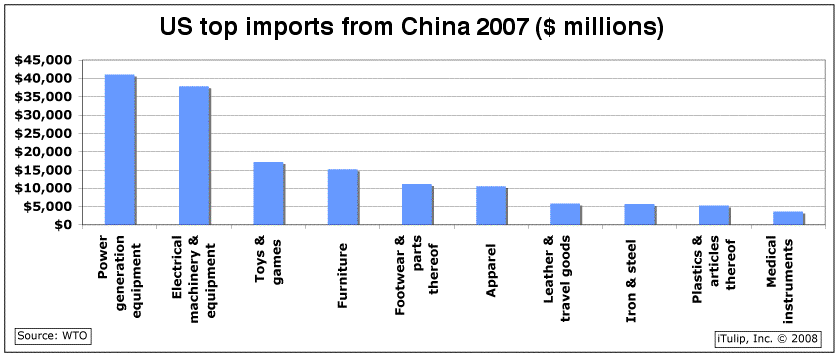
    AntiSpin: She is correct that China ships a lot of toys and games, footwear and apparel to the US by unit volume, but is unit volume as relevant as dollar volume? The World Trade Organization (WTO) web site, where we got the data to create the chart below, show that in fact China by dollar volume primarily sells power generation, electrical and machinery equipment not toys and games.


    The US in 2007 imported from China approximately $80 billion in power generation,
    electrical machinery and equipment and about the same dollar volume in everything else,
    including the toys, games, footwear and so on you see at the local mall.


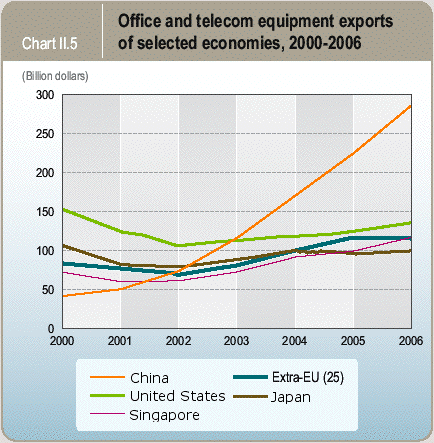
    How about the growth in high intellectual property rights value goods? Take office and telecommunications equipment exports, for example. Surely the US is growing in this area relative to China, especially considering the competitive boost a weak dollar is having for companies like Cisco and IBM. Schwab claims in the interview that a weak dollar is helping US exporters.

    Again, the WTO data do not bear this out.


    Key: China in orange, USA in green


    In 2006, US office and telco equipment exports by the US were up to 19% to $135B from $110B since 2002 when the dollar began to weaken by 50% against and index of other currencies. Yet without accounting for inflation, US exports are still off from a $150B level achieved in 2000. In inflation adjusted terms, dollar volume is off at least 20%. Meanwhile, China's office and telco equipment exports are up from $75B in 2002 to $275B in 2006, a 270% gain.

    Didn't the US make this mistake with respect to Japan in the 1970s, incorrectly assuming that Japan was destined to make low quality, low intellectual property value goods while the US excelled in high quality, high intellectual property value goods?

    The weak dollar policy is just as misguided, as the data on office and teco equipment show. It is not helping US exporters. This is especially true if your company is a manufacturer of goods that require energy to manufacture, you are getting killed by inflation.

    A new level of this inflation epiphany appeared yesterday when DOW Chemical announced an emergency increase in prices of its products.
    Dow Raising Prices Most Ever as Energy Costs Surge
    May 28, 2008 (Bloomberg)

    Dow Chemical Co., the largest U.S. chemical maker, will raise prices the most in the company's 111- year history because of surging costs for energy and raw materials used to make Styrofoam, pesticides and plastics. The ``unparalleled'' increases of as much as 20 percent on all of Dow's 3,200 products are needed after a 42 percent jump in first-quarter spending on raw materials and energy, Chief Executive Officer Andrew Liveris said today. The increases take effect June 1, the company said in a statement.

    Dow plans to pass on some of an expected $7.4 billion increase in energy and materials costs this year that Liveris said is due partly to the U.S. government's failure to develop policies to solve a ``true energy crisis.'' Higher food, fuel and metals prices are contributing to inflation and helped boost U.S. consumer prices 3.9 percent in the year ended in April.

    ``This is our largest across-the-board increase,'' Liveris said today in an interview at the company's headquarters in Midland, Michigan. ``We have a tsunami landing on us here,'' he said, adding that Dow has been boosting prices for four years.

    ``Dow is probably leading the charge here in being this aggressive, and others are probably going to follow suit,'' Tom Uutala, who helps manage $60 billion, including Dow shares, at Victory Capital Management, said in a phone interview from Cleveland.

    Liveris said today the U.S. government's failure to develop a comprehensive energy policy is causing the nation's chemical industry to lose ground to global competitors.

    ``The country now faces a true energy crisis, one that is causing serious harm to America's manufacturing sector and all consumers of energy,'' Liveris said in the statement.
    This is the first such emergency increase in the $54 billion company's 111-year history. The company was able to maintain its policy of giving customers 90 days notice on price increases even during the 1970s oil shock. This time the company is giving customers four days' notice.

    Noteworthy is the absence of DOW CEO Leveris' criticism of "speculators" who have been blamed by many recently for the increase in energy prices. We remain skeptical.

    What DOW Chemical and other manufacturing companies are experiencing is as we described in our inflation analysis Inflation in America - Part I: Five signs of inflation; the purchasing power of profits and bank balances is declining rapidly with respect to energy input costs in the production cycle. From a cash flow perspective, DOW is finding itself in the same position as your local restaurant. This is the dark side of the policy of using currency depreciation to grow exports. Short term, it gives the economy a nominal growth boost; long term, it wrecks the nation's competitiveness.

    The administration's de facto weak dollar policy is ruining US competitiveness, not helping it, and the resulting inflationary impact on consumers and businesses is hammering the economy, not improving it.

    The US needs to open its eyes and understand that China will continue to grow high value exports to compete in key areas of US competitive advantage just as Japan did in the 1980s and 1990s. The first step toward fixing the damage is to confront the problem head on, and stop using ideology based and politically expedient short term policy measures to paper over structural economic weakness.

    iTulip Select: The Investment Thesis for the Next Cycle™
    __________________________________________________

    To receive the iTulip Newsletter or iTulip Alerts, Join our FREE Email Mailing List

    Copyright © iTulip, Inc. 1998 - 2007 All Rights Reserved

    All information provided "as is" for informational purposes only, not intended for trading purposes or advice. Nothing appearing on this website should be considered a recommendation to buy or to sell any security or related financial instrument. iTulip, Inc. is not liable for any informational errors, incompleteness, or delays, or for any actions taken in reliance on information contained herein. Full Disclaimer

    These stooges help us make all our money Don't beat up on them.

    Leave a comment:


  • bart
    replied
    Re: Denial springs eternal

    Originally posted by FRED View Post
    Just the facts, man! For those who can "take 'em."

    That last chart is the one that told us our recession forecast was going to be spot on. Nothing like plunging real incomes on top of plunging home prices to drive households into a funk.
    I think the most amazing thing is how much just having a broad selection of real and basic facts makes forecasting and investing/trading so much simpler that it almost should be illegal.

    Now for our next trick, methinks we should put the FOMC and some Wall St. jocks & scum in a chart crossfire... :eek: :rolleyes: ;)

    Leave a comment:


  • Jim Nickerson
    replied
    Re: Denial springs eternal

    Originally posted by FRED View Post
    Just the facts, man! For those who can "take 'em."

    That last chart is the one that told us our recession forecast was going to be spot on. Nothing like plunging real incomes on top of plunging home prices to drive households into a funk.
    When will data allow that chart to be updated?

    Leave a comment:


  • FRED
    replied
    Re: Denial springs eternal

    Originally posted by bart View Post
    That ought to teach someone to ask a question about wealth classes, etc... :eek: ;) ... a veritable bonanza of charts in a crossfire. :cool:
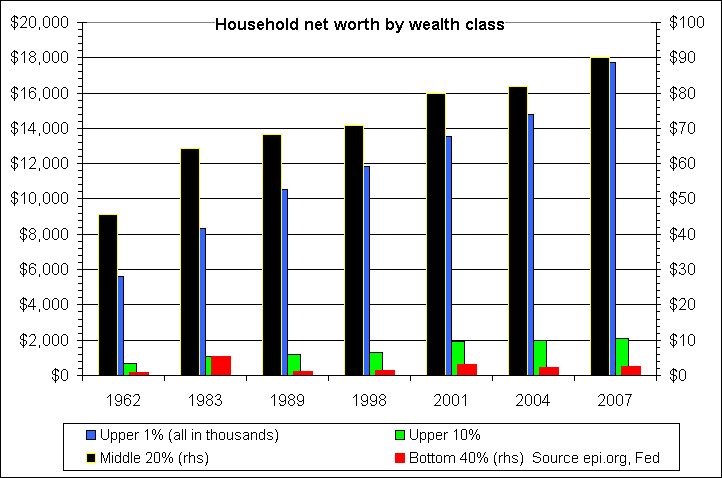
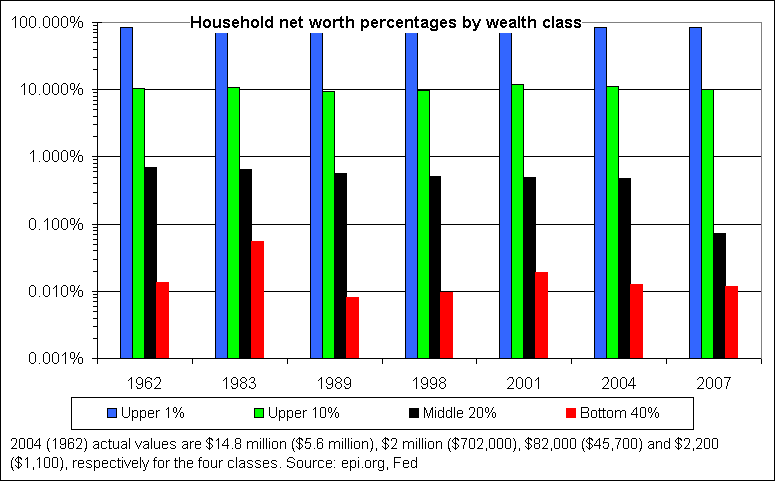
    Just the facts, man! For those who can "take 'em."

    That last chart is the one that told us our recession forecast was going to be spot on. Nothing like plunging real incomes on top of plunging home prices to drive households into a funk.

    Leave a comment:


  • bart
    replied
    Re: Denial springs eternal

    Originally posted by FRED View Post
    That ought to teach someone to ask a question about wealth classes, etc... :eek: ;) ... a veritable bonanza of charts in a crossfire. :cool:

    Leave a comment:


  • FRED
    replied
    Re: Denial springs eternal

    Originally posted by bart View Post


    From iTulip Charts and Graphs:


    Leave a comment:


  • bart
    replied
    Re: Denial springs eternal

    Originally posted by Finster View Post
    My hunch would line up pretty well with yours, Bruce. Probably a net negative for all but the extreme top of the wealth and income scale, the latter most particularly including those positioned to profit from the exodus of large amounts of capital such as Wall Street bankers, brokers, hedge fund managers and the like. Those positioned to benefit from inflation would also include corporate insiders whose compensation comes from stock options, as inflation tends to skew equity returns away from dividends and towards price appreciation.


    and in log:


    Leave a comment:


  • bill
    replied
    Re: Denial springs eternal

    Originally posted by Chris View Post
    FRED, what would a roll-back of the FIRE economy consist of? i.e. how would it work, and what would the effects be?

    Cut government FIRE incentives; roll over to a low carbon based reindustrialization.
    They better hurry up the jobless claims are building http://news.yahoo.com/s/ap/20080606/...fi/economy_117,,,expecially these folks http://reviewonline.com/page/content...sap=1&nav=5040 before they start sending resumes internationally.

    Leave a comment:


  • FRED
    replied
    Re: Denial springs eternal

    Originally posted by Chris View Post
    FRED, what would a roll-back of the FIRE economy consist of? i.e. how would it work, and what would the effects be?
    The real estate sector is rolling itself back. In order for the overall level of economic rent extraction to fall, household and business debt levels have decline. We have long assumed that this will happen by a combination of inflation and debt restructuring.

    Leave a comment:


  • Chris
    replied
    Re: Denial springs eternal

    FRED, what would a roll-back of the FIRE economy consist of? i.e. how would it work, and what would the effects be?

    Leave a comment:


  • FRED
    replied
    Re: Denial springs eternal

    Originally posted by Finster View Post
    My hunch would line up pretty well with yours, Bruce. Probably a net negative for all but the extreme top of the wealth and income scale, the latter most particularly including those positioned to profit from the exodus of large amounts of capital such as Wall Street bankers, brokers, hedge fund managers and the like. Those positioned to benefit from inflation would also include corporate insiders whose compensation comes from stock options, as inflation tends to skew equity returns away from dividends and towards price appreciation.
    We worked that out for y'all here in the iTulip Charts and Graphs section of the Photoblog.You can even drag and drop charts from there to the forum.


    The trade-off of "globalization" and the development of the FIRE Economy in the US since 1980 is falling traded goods costs and rising education, housing, and insurance costs (high economic rent on wage income). More recently, as the dollar cartel has broken down and the oil cartel strengthened by a combination of Peak Cheap Oil and loss of US political power in the Middle East since the Iraq War, energy prices have risen, too. If China gets its way and a new global currency is created under management of the IMF, the full brunt of the relatively low purchasing power of the US economy will be expressed as rising traded goods prices on top of everything else.

    The only way for the US economy can manage this event is if economic rent on wage income falls, that is, if the FIRE Economy is rolled back and a new, modern production-based economy is developed.
    Last edited by FRED; June 06, 2008, 08:56 AM.

    Leave a comment:


  • Finster
    replied
    Re: Denial springs eternal

    Originally posted by brucec42 View Post
    I'd like to see an analysis of globalism and US standard of living changes broken down by income group (I'm sure the wealthiest have profited from it) since we really went "global" full bore. Not sure when that occured, though. I guess it's been a steady progression.

    My hunch is it's been a net negative on real income if you factor in "hidden costs", which are myriad. One example would be the cost of just about every war fought since WWII and the combined military budgets exceeding a basic home-defense role sized military over the last 62 years. Another would be the loss of income to displaced workers from manufacturing. Yet another would be losses in worker wages due mass immigration vs historical averages.

    Compared to those costs, saving $250 on a flat panel TV or $1 on a pack of tube socks or $10 on a kid's toy might not quite match up.
    My hunch would line up pretty well with yours, Bruce. Probably a net negative for all but the extreme top of the wealth and income scale, the latter most particularly including those positioned to profit from the exodus of large amounts of capital such as Wall Street bankers, brokers, hedge fund managers and the like. Those positioned to benefit from inflation would also include corporate insiders whose compensation comes from stock options, as inflation tends to skew equity returns away from dividends and towards price appreciation.

    Leave a comment:


  • Guest's Avatar
    Guest replied
    Re: Denial springs eternal

    I'd like to see an analysis of globalism and US standard of living changes broken down by income group (I'm sure the wealthiest have profited from it) since we really went "global" full bore. Not sure when that occured, though. I guess it's been a steady progression.

    My hunch is it's been a net negative on real income if you factor in "hidden costs", which are myriad. One example would be the cost of just about every war fought since WWII and the combined military budgets exceeding a basic home-defense role sized military over the last 62 years. Another would be the loss of income to displaced workers from manufacturing. Yet another would be losses in worker wages due mass immigration vs historical averages.

    Compared to those costs, saving $250 on a flat panel TV or $1 on a pack of tube socks or $10 on a kid's toy might not quite match up.

    Leave a comment:

Working...
X